 Listicle
9 Best Affordable Skincare Picks for Sensitive Skin
Quick Summary
Affordable skincare for sensitive skin usually means a simple routine of a gentle cleanser, a fragrance-free moisturizer and a daily sunscreen, chosen by ingredients rather than price. Compare products by cost per use, since a larger bottle can be cheaper per application. Patch test each new product before using it on your whole face.
- Fragrance-free is more reliable than unscented, which can contain masking fragrance.
- Cetaphil Gentle Skin Cleanser lists at $10.78, about $0.18 per use at twice daily for 30 days.
- Aveeno Calm + Restore Oat Gel Moisturizer lists at $19.99, about $0.17 per use over 60 days.
- Apply a small amount to the inner forearm or behind the ear daily for about a week before full use.
- Introduce one new product at a time so you can identify any reaction.
Table of Contents
- How We Chose These Affordable Sensitive-Skin Picks
- Quick Comparison: Prices and Best Uses for Each Pick
- Best Drugstore Skincare for Sensitive Skin: Cleansers and Moisturizers
- Gentle Cleanser for Sensitive Skin: Which Budget Options Work
- Sunscreen for Sensitive Skin: Affordable Options to Consider
- Budget Skincare Routine for Sensitive Skin and Cost per Use
- Patch Testing and Ingredients to Avoid Before You Buy
- Start Your Sensitive-Skin Routine With Radiant Essence Beauty
- Frequently Asked Questions
Last Updated: October 29, 2026
Sensitive skin doesn't have to mean an expensive routine. Many people with reactive, dry or easily irritated skin spend more than they need on products that sting or sit unused. This guide covers affordable skincare for sensitive skin, with a focus on gentle cleansers, moisturizers and sunscreens that stay within a modest budget. Our goal is to help you pick products that suit your skin, not just the ones with the nicest packaging. Sensitive skin is generally skin that reacts more easily to fragrance, certain ingredients and harsh cleansing, which is why ingredient choice matters as much as price.
How We Chose These Affordable Sensitive-Skin Picks
Prices change, so confirm them at checkout before you buy.
Quick Comparison: Prices and Best Uses for Each Pick
Affordability is easier to judge when prices sit in tiers and you can see cost per use, not just a sticker price. Confirm current prices at checkout, because prices change. For a look at higher-end options for comparison, see professional skincare for mature skin.
| Product | Category | Tier | Listed Price | Cost per Use (est.) | Best For |
|---|---|---|---|---|---|
| Cetaphil Gentle Skin Cleanser | Cleanser | $ (under $15) | $10.78 | ~$0.18 (2x daily, 30 days) | Extra-sensitive skin on a budget |
| Aveeno Calm + Restore Oat Gel Moisturizer | Moisturizer | $$ ($15-$25) | $19.99 | ~$0.17 (2x daily, 60 days) | Irritated or inflamed skin |
| Vanicream | Multiple | $ | Not listed | Varies by product | Affordable sensitive-skin basics |
| Eucerin | Multiple | $-$$ | Not listed | Varies by product | Sensitive-skin routines |
| CeraVe | Multiple | $ | Not listed | Varies by product | Budget sensitive-skin essentials |
| The Ordinary | Multiple | $-$$ | Not listed | Varies by product | Budget actives and sun protection |
| La Roche-Posay | Multiple | $$-$$$ | Not listed | Varies by product | Gentle, dermatologist-recommended options |
| BYOMA | Multiple | $ | Not listed | Varies by product | Lower-cost clean skincare |
| Lubriderm Advanced Therapy Lotion | Lotion | $ | Not listed | Varies by product | Sensitive-skin body care |
Cost per use beats sticker price. Divide the listed price by the number of applications you expect. A larger bottle that costs more up front can be cheaper per use, run the math before you assume the lowest price tag wins.
Best Drugstore Skincare for Sensitive Skin: Cleansers and Moisturizers
Drugstore brands are often the easiest place to start. Several names appear repeatedly in sensitive-skin budget guides, including Vanicream, Eucerin and CeraVe. Our sources do not give product-level details for most of them, so check each label for fragrance, dyes and the ingredients you already know irritate you.
Check current prices for these products at checkout before purchase.
Gentle Cleanser for Sensitive Skin: Which Budget Options Work
A cleanser does the most work of any product in a sensitive-skin routine, so it is worth getting right. Look for a fragrance-free, non-foaming or low-foaming formula. Harsh cleansers strip the skin barrier, and a damaged barrier reacts to almost everything else you apply.
Use it once or twice a day and rinse with lukewarm water.
Sunscreen for Sensitive Skin: Affordable Options to Consider
Sunscreen is the step most people with sensitive skin skip, and it is the one that prevents the most long-term damage. Mineral sunscreens with zinc oxide or titanium dioxide are sometimes better tolerated than some chemical filters, though reactions vary. Look for broad-spectrum protection with an SPF of at least 30 (the American Academy of Dermatology).
Patch test any sunscreen before applying it to your whole face, and check the ingredient list against your known triggers.
Budget Skincare Routine for Sensitive Skin and Cost per Use
A simple routine is easier on sensitive skin and on your budget. A practical starting set is a gentle cleanser, a fragrance-free moisturizer and a daily sunscreen. For a simple, gentle moisturizer, see this moisturizing cream for soft, smooth skin. Three products cover the essentials.
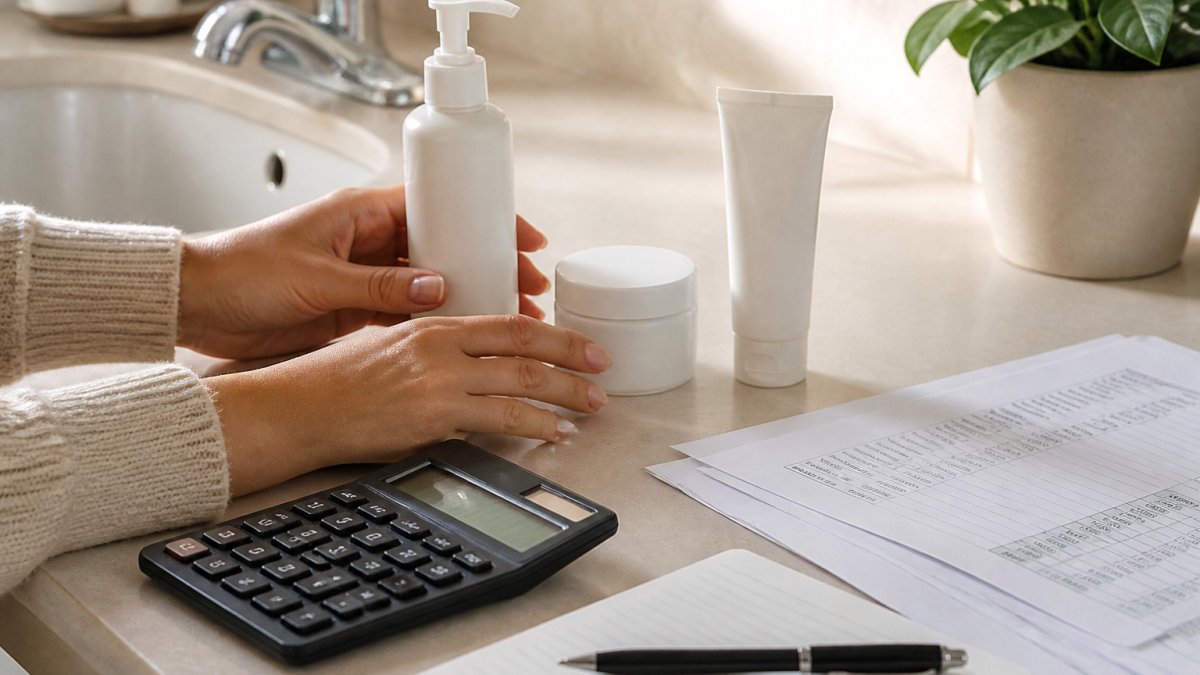
Cost per use is the better way to compare. A $19.99 moisturizer used twice a day for 60 days costs about 17 cents per application. A $10.78 cleanser used twice daily for 30 days costs about 18 cents per use. Calculate your own figures by dividing the price by the number of uses before you buy.
Patch Testing and Ingredients to Avoid Before You Buy
Most sensitive-skin guides name a few irritants and move on. This section goes ingredient by ingredient, defines the label terms that matter, and gives a stepwise patch-test protocol you can follow before a product touches your face. Individual reactions vary, a ingredient that suits one person can sting another, so treat this as a filter, not a guarantee.
Ingredients to approach with caution
- Synthetic fragrance and "parfum", among the most common causes of contact reactions. Fragrance-free is not the same as unscented; "unscented" can contain masking fragrance.
- Essential oils (peppermint, citrus, lavender, eucalyptus), natural does not mean gentle; these can irritate reactive skin.
- Alcohol denat., can sting and dry the skin barrier, especially in toners and gels.
- Certain preservatives, some people react to formaldehyde-releasing preservatives or methylisothiazolinone; check the label if you have had reactions before.
- Physical exfoliants and high-strength acids, scrubs, high-percentage AHAs and BHAs can compromise an already reactive barrier.
- Dyes and added color, a less common but real trigger; fragrance-free, dye-free formulas reduce the variables.
Ingredients that often help sensitive skin
- Ceramides, support the skin barrier.
- Glycerin and hyaluronic acid, humectants that draw in water.
- Colloidal oatmeal, a common soothing ingredient in moisturizers marketed for irritated skin.
- Zinc oxide and titanium dioxide, mineral sunscreen filters often better tolerated than some chemical filters.
- Niacinamide, generally well tolerated at lower percentages, though some people report stinging at higher ones.
Label terms, defined
- Fragrance-free, no added fragrance; the most reliable term for fragrance-sensitive users.
- Unscented, may contain masking fragrance to neutralize a scent; not the same as fragrance-free.
- Non-comedogenic, formulated not to clog pores; useful for acne-prone sensitive skin.
- Hypoallergenic, a marketing term, not a regulated standard; it does not guarantee you will not react.
- Dermatologist-tested, the product was tested, not necessarily endorsed; read the ingredient list yourself.
Stepwise patch-test protocol
- Read the full ingredient list first and compare it against triggers you already know.
- Apply a small amount to the inner forearm or behind the ear once a day for about a week.
- Watch for redness, itching, burning or bumps. Stop at the first sign of a reaction.
- If no reaction appears, try a small amount on the jawline for two to three days.
- Then introduce one new product at a time to the full face, so you can tell which product caused a reaction.
Start Your Sensitive-Skin Routine With Radiant Essence Beauty
Radiant Essence Beauty offers a selection of skincare, makeup and fragrance from an online shop focused on customer service. If you are building a gentle, budget-friendly routine, start with a simple set of cleanser, moisturizer and sunscreen, then add products as your skin tolerates them. Shop Now to browse products.
Frequently Asked Questions
Can affordable skincare products work for sensitive skin?
Yes, many affordable products suit sensitive skin when they are fragrance-free, use a short ingredient list and avoid common irritants such as strong fragrance, denatured alcohol and harsh physical exfoliants. Price is not the deciding factor. Check the label for fragrance-free or for sensitive-skin claims, and test any new product on a small patch of skin for several days before using it across your face.
What is the best drugstore skincare for sensitive skin?
Prices vary by size and retailer, so compare the cost per ounce rather than the sticker price. Choose a cleanser, moisturizer and sunscreen from the same simple range if you want a consistent routine that is easy to maintain.
How do I patch test a new skincare product?
Apply a small amount to a discreet area such as the inner forearm or behind the ear once a day for three to five days. Watch for redness, itching, stinging or bumps. If nothing develops, you can introduce the product to your face, starting every other day. Stop using it and rinse the area if irritation appears.
What ingredients should people with sensitive skin avoid?
Common irritants include added fragrance and essential oils, denatured alcohol, sodium lauryl sulfate, strong acids and high concentrations of retinoids introduced too quickly. Fragrance-free products with simple formulas are the safest starting point. Introduce one new product at a time so that any reaction can be traced to its source.