 Listicle
Best Anti-Aging Skincare for 40s: 7 Products That Work
Table of Contents
- Why Your 40s Demand a Different Anti-Aging Skincare Approach
- Quick Comparison: Best Anti-Aging Skincare for 40s
- 1. SkinCeuticals C E Ferulic: Best Vitamin C Serum for Sun Damage
- 2. SkinMedica Retinol Complex: Best Retinol Skincare for 40s
- 3. Medik8 Advanced Pro-Collagen+ Peptide Cream: Best Anti-Aging Cream for 40s
- 4. Caudalie Resveratrol-Lift Serum: Best for Loss of Firmness
- 5. Shiseido Benefiance Wrinkle Smoothing Cream Enriched: Best for Fine Lines
- 6. CeraVe Skin Renewing Retinol Serum: Best Affordable Anti-Aging Skincare Product
- How to Build a Skincare Routine for Over 40 Skin
- When to See a Dermatologist
- Frequently Asked Questions
Last Updated: October 17, 2026
Why Your 40s Demand a Different Anti-Aging Skincare Approach
Your skin in your 40s doesn't behave like it did in your 20s, and the best anti aging skincare for 40s reflects that shift. Cell turnover slows, collagen production declines, and the barrier that once shrugged off late nights now reacts to everything.
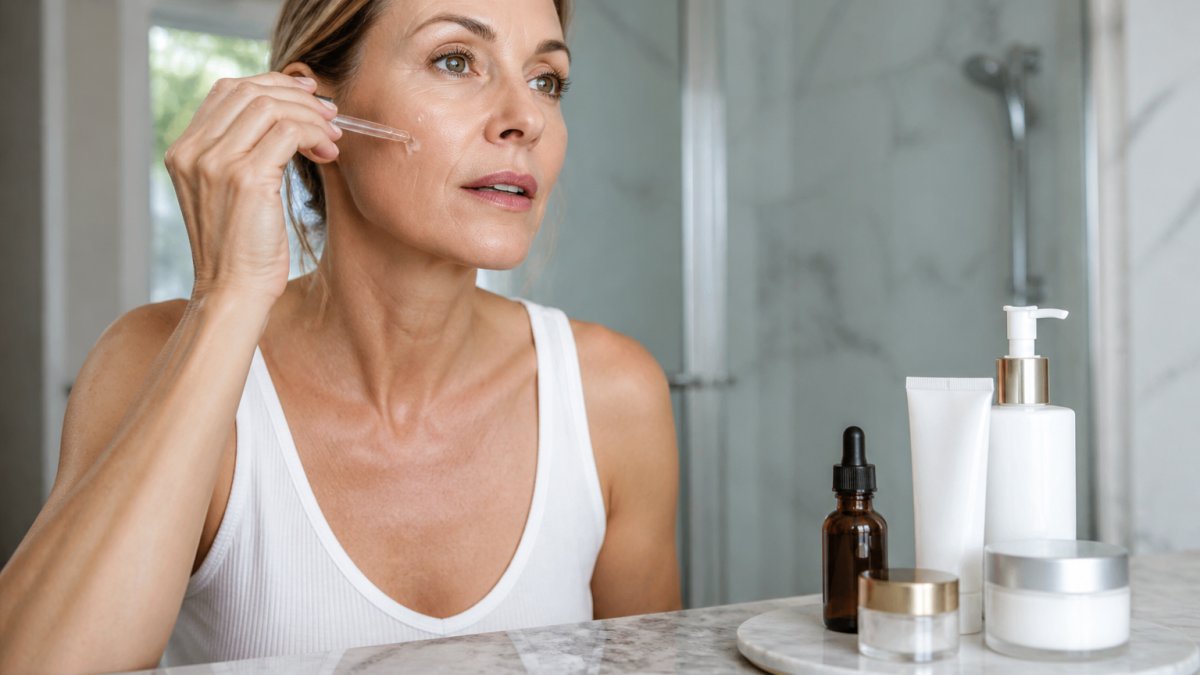
Anti-aging skincare is the practice of using active ingredients, consistent routines, and daily sun protection to slow visible signs of aging and support skin renewal. In your 40s, that means prioritizing cell turnover, collagen support, hydration, and barrier repair over the light maintenance routine you may have relied on before.
The practical difference: fine lines deepen into wrinkles, discoloration from old sun damage surfaces, and loss of firmness shows along the jawline. You need actives that address these concerns, not just moisturizer.
Here's what most guides get wrong: they list products without explaining how to layer them, when to expect results, or how to avoid irritation. We'll cover all three.
Quick Comparison: Best Anti-Aging Skincare for 40s
| Product | Best For | Key Active | Strength Options | Budget Tier |
|---|---|---|---|---|
| SkinCeuticals C E Ferulic | Sun damage, discoloration | Vitamin C | One formula | Higher |
| SkinMedica Retinol Complex | Retinol beginners to experienced | Retinol | 0.25%, 0.5%, 1% | Higher |
| Medik8 Advanced Pro-Collagen+ Peptide Cream | Loss of firmness | Peptides | One formula | Higher |
| Caudalie Resveratrol-Lift Serum | Firmness, antioxidant support | Resveratrol | One formula | Mid |
| Shiseido Benefiance Wrinkle Smoothing Cream Enriched | Fine lines | Wrinkle-smoothing complex | One formula | Higher |
| CeraVe Skin Renewing Retinol Serum | Budget-conscious retinol users | Retinol | One formula | Accessible |
1. SkinCeuticals C E Ferulic: Best Vitamin C Serum for Sun Damage
The verdict: If discoloration and sun damage top your list of skin concerns, this is the vitamin C serum to beat. Allure named it a mature skin-care winner in its 2026 Best of Beauty coverage, and that recognition tracks with how dermatologists talk about antioxidant protection.
What works: Vitamin C neutralizes free radicals from daily UV exposure before they break down collagen. Applied each morning under sunscreen, it supports a brighter, more even skin tone over time. The formula also includes ferulic acid, which stabilizes the vitamin C so it stays effective longer.
What doesn't: It's a higher-tier investment, and the supplied research doesn't state a current price, so check the product page for today's cost. Sensitive skin may tingle on first use.
2. SkinMedica Retinol Complex: Best Retinol Skincare for 40s
The verdict: This is the retinol we point people toward when they want to control their own ramp-up. Wirecutter describes it as especially well suited to aging skin, and it comes in three strengths.
What works: The 0.25%, 0.5%, and 1% options let you start low and build tolerance, which is exactly how retinol skincare for 40s should be introduced. The formula is fragrance-free, a real advantage for sensitive skin.
What doesn't: The supplied research doesn't state pricing, and it provides no application guidance. Start twice weekly at night and increase only when your skin stays calm.
3. Medik8 Advanced Pro-Collagen+ Peptide Cream: Best Anti-Aging Cream for 40s
The verdict: For loss of firmness, this peptide cream earns its place. Allure included it among its 2026 Best of Beauty mature skin-care winners.
What works: Peptides signal skin to support collagen production, and a cream format seals in hydration overnight. That combination matters in your 40s, when both collagen and moisture levels drop.
What doesn't: The research doesn't state the price or detailed ingredient information. Pair it with a retinol on alternate nights rather than layering both at once.
4. Caudalie Resveratrol-Lift Serum: Best for Loss of Firmness
A serum built around resveratrol, an antioxidant, this pick appears both in Allure's 2026 mature skin-care winners and in 40s-focused skincare results. It suits people who want firmness support without retinol.
Use it in the morning beneath sunscreen. The research doesn't state pricing or detailed performance claims, so set expectations around gradual improvement rather than overnight lifting.
5. Shiseido Benefiance Wrinkle Smoothing Cream Enriched: Best for Fine Lines
Byrdie named this its overall favorite in a 2026 wrinkle-cream roundup, and the review highlights its smoothing performance. For fine lines around the eyes and mouth, a rich cream like this one delivers hydration that plumps the surface.
It's an enriched formula, so oily skin may find it heavy. The research doesn't state pricing or full ingredient details.
6. CeraVe Skin Renewing Retinol Serum: Best Affordable Anti-Aging Skincare Product
Budget shouldn't lock you out of retinol. CeraVe's serum appeared in CNN Underscored's best anti-aging roundup and an InStyle anti-aging list, and the cited price is around $20, though the article reports it rather than confirming a current official price.
For affordable anti-aging skincare products, this is an entry point often recommended: a drugstore brand, a familiar format, and a low financial risk if your skin needs a slower start.
How to Build a Skincare Routine for Over 40 Skin
A skincare routine for over 40 works best when you layer by texture and purpose: thinnest to thickest, water-based before oil-based, and actives before moisturizer so they can penetrate. The order matters as much as the products, because a rich cream applied first can block a serum from reaching the skin.
The base sequence is the same for most people:
- Morning: cleanser, vitamin C serum, moisturizer, broad-spectrum sunscreen (SPF 30 or higher)
- Evening: cleanser, retinol (two to three nights weekly at first), peptide or barrier cream
- Weekly: one rest night with moisturizer only
What changes is how you adjust that base for your skin type. A practical decision path:
Dry or dehydrated skin. Use a cream cleanser rather than a foaming one, and apply vitamin C to slightly damp skin to reduce tightness. Choose a moisturizer with ceramides or glycerin, and consider a hydrating toner before your serum. Retinol can be buffered by applying moisturizer first, then retinol, then a second layer of moisturizer, a technique often called the sandwich method.
Oily or combination skin. A gel cleanser and a lightweight, oil-free moisturizer keep the routine from feeling heavy. Niacinamide is a useful addition because it supports the barrier without added oil. If you use a rich cream like an enriched wrinkle formula, reserve it for the dry zones of your face rather than the whole face.
Sensitive skin. Introduce one active at a time, two weeks apart, and start retinol at the lowest strength available. Fragrance-free formulas reduce one common trigger. If your skin stings for more than a few minutes after application, stop the new product and return to cleanser, moisturizer, and sunscreen until the barrier settles.
Normal skin with early aging concerns. You have the most flexibility: vitamin C in the morning, retinol two to three nights weekly, and a peptide cream on alternate nights. This is the simplest path to maintain.
How to introduce retinoids without quitting
Retinol is the most common reason people abandon an anti-aging routine, and the fix is pacing rather than willpower. A workable ramp-up:
- Weeks 1-4: Apply a low-strength retinol (around 0.25%) twice weekly at night, on dry skin, followed by moisturizer.
- Weeks 5-8: If skin stays calm, add a third night.
- Week 9 onward: Increase frequency or step up in strength, not both at once.
Signs you should pause: persistent redness, stinging that lasts beyond a few minutes, or visible peeling that doesn't settle within a few days. Pause for a week, then restart at the previous frequency. Buffering with moisturizer and avoiding other exfoliants on retinol nights reduces irritation.
Ingredient compatibility and layering order
Some combinations work well together; others compete or compound irritation.
- Vitamin C and sunscreen: Layer vitamin C first, let it absorb, then apply sunscreen. This is a complementary pairing.
- Retinol and vitamin C: Use vitamin C in the morning and retinol at night rather than layering both at once, especially when you are building tolerance.
- Retinol and exfoliants (AHA/BHA): Alternate nights rather than combining, or irritation is likely.
- Peptides and retinol: These can be used on alternate nights; layering both at once is unnecessary and can be irritating for some skin.
- Niacinamide: Generally compatible with most actives and useful for barrier support.
Realistic timelines
Topical actives often need eight to twelve weeks of consistent use before visible change, and some concerns, particularly discoloration and fine lines, take longer. Hydration and barrier improvements can show within a few weeks, while collagen-related firmness changes are slower. Set expectations around gradual improvement rather than overnight results.
When to See a Dermatologist
Most anti-aging skincare concerns can be managed at home with a consistent routine, but some situations call for professional evaluation. Knowing the difference saves time and, in some cases, matters for your health.
See a dermatologist promptly if you notice:
- A mole or spot that changes in size, shape, or color, or that bleeds or itches (Common Moles, Dysplastic Nevi, and Risk of Melanoma)
- Persistent redness, swelling, or a rash that doesn't improve after you stop new products
- Sudden skin changes, such as new breakouts in your 40s or a reaction to a product you've used for years
- Stinging or burning that continues beyond a few minutes after application and doesn't settle with a simplified routine
Consider a consultation if topical skincare isn't enough:
- Deep wrinkles or significant loss of firmness that over-the-counter products can't reach
- Discoloration or melasma that persists despite daily sunscreen and vitamin C
- Acne or rosacea that is interfering with your routine
- You want to discuss prescription retinoids or in-office treatments
A dermatologist can assess whether prescription retinoids, in-office treatments, or other options suit your skin, and can rule out conditions that topical products won't fix. Bring a list of the products you use and how often, that context speeds up the conversation.
For everything else, start with the routine above, give it eight to twelve weeks, and adjust based on how your skin responds. If you are unsure whether a concern is routine-related or medical, err on the side of asking.
Frequently Asked Questions
What skin care should I use at 40?
At 40, focus on a gentle cleanser, a vitamin C serum in the morning, a retinol product at night, a moisturizer, and daily broad-spectrum sunscreen. This combination addresses cell turnover, collagen support, and sun damage. Introduce active ingredients one at a time to avoid irritation. A consistent routine matters more than the number of products you use.
Which is the best anti-aging cream for 40s?
The best anti-aging cream for 40s depends on your main concern. For fine lines and wrinkles, Shiseido Benefiance Wrinkle Smoothing Cream Enriched was named Byrdie's overall favorite in its 2026 roundup. For collagen support, Medik8 Advanced Pro-Collagen+ Peptide Cream was recognized in Allure's 2026 mature skin-care winners. Match the cream to your skin type and sensitivity.
How long does it take to see results from anti-aging skincare?
Most anti-aging skincare takes 8 to 12 weeks of consistent use to show visible changes in fine lines, skin tone, and texture. Retinol may cause mild irritation in the first few weeks before skin adjusts. Vitamin C and peptide products typically need 4 to 6 weeks. Photograph your skin monthly under the same lighting to track real progress rather than relying on memory.
Can I use retinol and vitamin C together?
Yes, but timing matters. Use vitamin C in the morning for antioxidant protection and retinol at night to support cell turnover. Applying both at once can increase irritation, especially for sensitive skin. If you prefer to use them in the same routine, apply vitamin C first, wait a few minutes, then follow with a low-strength retinol. Always finish with sunscreen in the morning.
Finding professional-grade products for mature skin shouldn't mean guesswork or markup. Radiant Essence Beauty stocks dermatologist-recommended formulas with fast, reliable shipping and a customer service team that answers ingredient questions before you buy. Shop our anti-aging collection and build a routine that fits your skin, your budget, and your schedule.