 how-to
How to Avoid Fake Beauty Products: 2026 Safety Guide
Table of Contents
- Why Counterfeit Beauty Products Are a Growing Threat
- The Real Dangers of Counterfeit Skincare and Makeup
- Step 1: Shop Only With Authorized Retailers
- Step 2: How to Verify Beauty Product Authenticity Before You Buy
- Step 3: Inspect Packaging, Labels, and Batch Codes
- Step 4: Spot Red Flags in Online Seller Profiles and Prices
- Step 5: Reporting Counterfeit Cosmetics to the FDA
- Conclusion: Shop Smart and Stay Protected
- Frequently Asked Questions
Last Updated: September 14, 2026
Why Counterfeit Beauty Products Are a Growing Threat
Learning how to avoid fake beauty products is now a genuine safety concern, not a minor shopping annoyance. Counterfeit cosmetics carry risks well beyond wasted money, including skin damage and unregulated ingredients. This guide from Radiant Essence Beauty walks through the verification steps that separate a legitimate purchase from a dangerous one.
The shift toward online shopping has made the problem harder to spot. A counterfeit seller can replicate a product photo perfectly, undercut legitimate pricing, and disappear before complaints surface. The FDA's guidance on counterfeit cosmetics and personal care products notes that these items often contain unapproved or harmful substances, which is why verification matters before you buy, not after.
The Psychology of the Counterfeit Market
Counterfeiters exploit urgency, scarcity, and trust. "Limited stock" or "warehouse clearance" listings pressure buyers to skip their usual checks.
Most shoppers assume a polished product page signals a legitimate seller, exactly what fraudsters count on.
Treating a low price as a bonus rather than a warning sign is a common mistake. When a product costs noticeably less than everywhere else, that gap usually reflects a missing quality control step in the supply chain.
The Real Dangers of Counterfeit Skincare and Makeup
The dangers of counterfeit skincare are not hypothetical. Unregulated formulas can contain heavy metals, unlisted allergens, or bacterial contamination, and because the label is fake, you have no reliable way to know what you're applying (the FDA).
Skin reactions are the most common outcome: irritation, breakouts, or a dermatological reaction is often the first sign a product was counterfeit.
Toxic Ingredients and Health Risks
Fake formulas are sometimes made without any regulatory oversight, so carcinogens, arsenic, and heavy metals can appear in products that look identical to the real thing.
There's no reliable way to detect these by sight or smell alone. This is why prevention, not detection after the fact, is the only dependable strategy.
Step 1: Shop Only With Authorized Retailers
The single most effective way to avoid fake beauty products is to buy only from an authorized retailer or the brand's official storefront. An authorized retailer has a direct supply chain relationship with the brand, so the product's origin is traceable.
Unauthorized distributors often source stock through the gray market, where authenticity cannot be guaranteed. A third-party marketplace listing may be legitimate, but the platform rarely verifies the seller's supply chain.
- Check the brand's official website for a list of authorized sellers
- Buy directly from the brand when the option exists
- Treat unfamiliar resellers with extra caution, even on major platforms
- Avoid sellers who cannot explain where their stock originates
Step 2: How to Verify Beauty Product Authenticity Before You Buy
Knowing how to verify beauty product authenticity before checkout saves you a return and the risk of a reaction. Verification starts with the seller, then moves to the product, and works best as a sequence of checks rather than a single glance.
Start with the seller's sourcing story. A legitimate seller can name the distributor that supplied the stock and whether the brand authorizes it. If a seller dodges questions about where their stock comes from, that silence is your answer.
Then check the product page: look for a tamper-evident seal in the listing photos, a verifiable batch code, and a clear expiration date. If the listing crops out the batch code or shows only a stock image, ask for a photo of the actual unit they will ship. A seller who cannot produce one is a seller to skip.
Digital Authentication Tools and Barcode Scanning
Barcode scanning has made verification faster. Many brands offer QR codes or authentication portals that confirm whether a batch code is genuine. Third-party apps can scan a barcode and pull up product information, but they are only as reliable as the database behind them.
Most guides stop short here, telling you to "check the code" without noting that a cloned code can pass a basic scan. The real test is whether the code matches the specific product and packaging you're holding, not just whether it exists in a database. A genuine batch code corresponds to the exact product variant, size, and production run. If the same code appears on a different shade, size, or year, treat it as suspect.
A practical workflow looks like this:
- Scan the QR code or enter the batch code on the brand's official authentication page.
- Confirm the product name, shade, and size returned by the portal match what you ordered.
- Check the production date against the expiration date on the packaging.
- Photograph the code and the packaging together before opening the product.
If the brand has no authentication portal, search the batch code format online. Most manufacturers use a consistent format across product lines, and a code that breaks that pattern is a warning sign.
The Gray Market vs. Counterfeit Distinction
Many shoppers assume any product not bought directly from the brand is counterfeit. That is inaccurate, and the confusion costs people money and peace of mind.
Gray market goods are genuine products sold through channels the brand did not authorize. They may be made in a different region, carry different labeling, or lack a domestic warranty. They are not fake, but they are not backed by the brand's domestic customer service or return policies.
Counterfeit goods are unauthorized replicas made to look like the real product. They carry the health risks described earlier and offer no recourse if something goes wrong.
The practical difference matters when deciding whether to buy. A gray market seller may offer a genuine product at a discount, but you lose the brand's warranty and may get a version formulated for a different market. A counterfeit seller offers a product the brand never made at all.
If you are unsure which category a seller falls into, ask directly whether the product carries a domestic warranty and whether the seller is an authorized retailer. A gray market seller will often admit the product is imported or not covered by warranty. A counterfeit seller will usually avoid the question or claim authorization they do not have.
Step 3: Inspect Packaging, Labels, and Batch Codes
Physical inspection catches what photos online cannot. Counterfeit packaging often shows small but telling flaws in print quality, font consistency, and seal integrity. Visual checks only go so far, though, so this section also covers what to do after you have the product in hand.
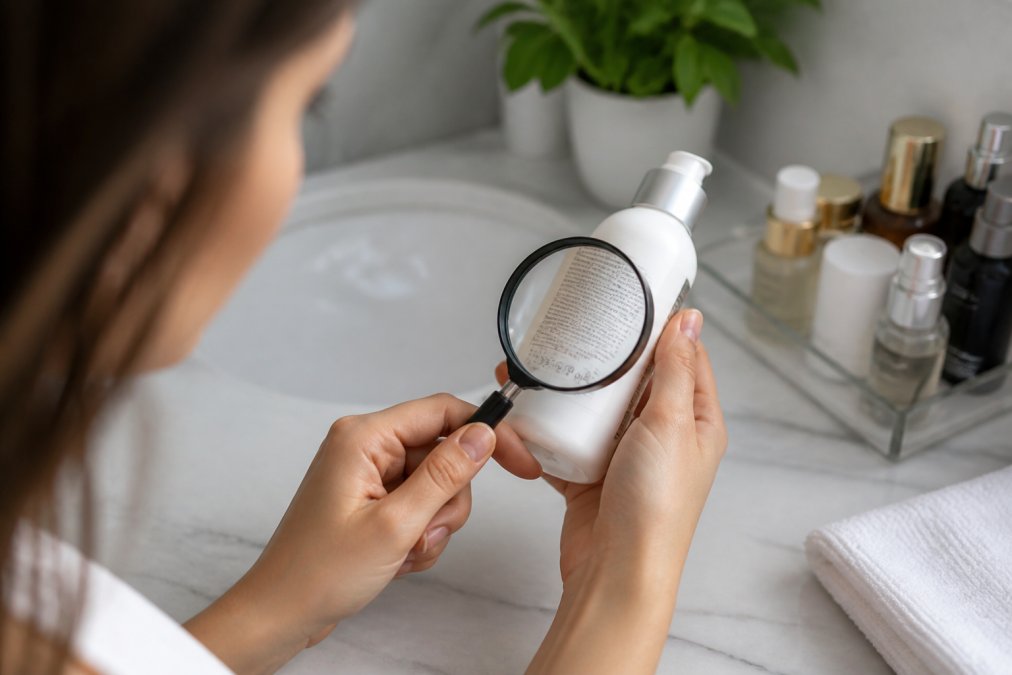
Start with the packaging integrity itself. A tamper-evident seal that looks resealed, misaligned, or missing entirely is a serious red flag. Then move to the labeling.
Ingredient Labeling and Misspellings
Labeling errors are one of the most reliable counterfeit signals. Misspelled ingredient names, inconsistent fonts, or a missing ingredient list suggest the packaging was produced outside official manufacturing standards.
Compare the label against the brand's official product page. If the ingredient list, batch number format, or expiration date placement doesn't match, treat the product as suspect. Regulated cosmetics list ingredients in descending order of concentration, and counterfeit labels often get that order wrong or omit minor ingredients entirely (Federal Register).
Batch Numbers and Expiry Date Verification
A batch code should correspond to a specific production run, and the expiry date should follow a consistent format across the brand's products. Counterfeiters frequently reuse one batch code across unrelated products.
If the same code appears on two different items, or the expiry date looks printed separately from the rest of the label, take that inconsistency seriously. A genuine batch code is usually printed or stamped during manufacturing, not added as a sticker or separate print run.
| Check | What to Look For | Red Flag |
|---|---|---|
| Tamper seal | Intact, aligned, unbroken | Resealed or missing |
| Label print | Crisp text, consistent font | Blurry or mismatched font |
| Ingredient list | Complete, correctly spelled, in descending order | Missing, misspelled, or out of order |
| Batch code | Matches brand format, printed as part of manufacturing | Reused across products or added as a sticker |
| Expiry date | Consistent format, printed with the label | Printed separately or in a different font |
Post-Purchase Testing: What to Do After You Buy
If you have already bought a product and want to verify it before using it on your face, a few simple home tests can help. These are not definitive, but they can flag a product that deserves closer scrutiny.
For skincare products, pH strips can give a rough reading. Most formulas fall within a specific pH range, and a product reading far outside it may not be what it claims. Test a small amount per the strip instructions and compare the result to the pH range the brand lists.
For creams and lotions, texture and smell are useful signals. A product that separates, feels gritty, or smells different from a previous purchase may have been stored improperly or may not be genuine. Consistency changes are not proof of counterfeiting, but they are a reason to recheck the batch code.
For makeup, swatch the product on your inner arm before applying it to your face. A formula that applies differently, feels heavier, or causes immediate irritation is worth setting aside until you can verify it.
If a home test raises doubts, photograph the packaging, batch code, and test result before returning the product. That evidence supports both a refund request and an FDA report if the product turns out to be counterfeit.
Step 4: Spot Red Flags in Online Seller Profiles and Prices
A price discrepancy is the fastest signal something is off. If a product is listed well below what authorized sellers charge, the discount usually reflects a shortcut in the supply chain, not a genuine deal.
Seller profiles tell a similar story. New accounts with few reviews, generic product photos, and vague return policies are common traits among fraudulent listings.
- No physical business address or contact method
- Reviews that repeat similar phrasing or appear in clusters
- Return policies that are vague or nonexistent
- Product photos that look copied from other listings
E-commerce fraud has grown more sophisticated, so checking the seller's history matters as much as checking the product. A reputable seller has a consistent track record and clear contact information.
Step 5: Reporting Counterfeit Cosmetics to the FDA
Reporting counterfeit cosmetics to the FDA helps protect other shoppers and can trigger a broader investigation into a fraudulent seller. The FDA accepts reports through MedWatch and its online reporting portal.
Before filing, gather your evidence: photos of the product and packaging, the batch code, your order confirmation, and any communication with the seller. The more specific your report, the more useful it is.
If you purchased through an online marketplace, report it to the platform too. Many have dedicated counterfeit reporting channels that move faster than a general customer service ticket.
Conclusion: Shop Smart and Stay Protected
Counterfeit beauty products are a persistent risk, but they rely on shoppers skipping verification steps. Buying from authorized retailers, checking batch codes, and inspecting packaging before use closes most of the gaps fraudsters exploit.
At Radiant Essence Beauty, we built our store around a fast, user-friendly shopping experience and a customer-service-oriented approach. Our team brings years of industry experience to curating high-quality beauty products at accessible prices, and we are dedicated to delivering excellence in every order.
Get started with Radiant Essence Beauty and shop with confidence, knowing every product you order is backed by a team that takes authenticity seriously.
Frequently Asked Questions
What are the health risks of using counterfeit makeup?
Counterfeit makeup often contains toxic ingredients like arsenic, heavy metals, and carcinogens that aren't listed on the label. These can cause severe dermatological reactions, allergic responses, and long-term health damage. Because counterfeit products bypass quality control and manufacturing standards, they may also harbor bacteria from unsanitary production facilities. If you experience irritation after using a product, stop immediately and consult a dermatologist.
How can I tell if a beauty product is authentic?
Check the batch code and expiry date against the brand's official website or app. Look for a tamper-evident seal, consistent product texture and smell, and accurate spelling on the ingredient list. Scan the barcode with a verification app if available. Purchase only from authorized retailers, and be wary of prices that seem too low. If packaging feels flimsy or fonts look off, that's a red flag.
What should I do if I accidentally bought a fake beauty product?
Stop using it immediately and take photos of the product, packaging, and receipt. Report the seller to the online marketplace and file a report with the FDA through their MedWatch program. If you paid by credit card, dispute the charge. You can also warn others by leaving a review. For reporting counterfeit cosmetics to the FDA, visit the FDA's website for the correct form and instructions.
Why should I avoid buying beauty products from third-party marketplaces?
Third-party marketplaces often have less oversight, allowing unauthorized distributors to sell counterfeit goods. These sellers may use phishing tactics or fake reviews to appear legitimate. Without supply chain transparency, you can't verify where the product came from or how it was stored. Stick to reputable sellers, brand websites, or authorized retailers to reduce your risk of receiving expired or tampered products.