 ultimate-guide
How to Build a Skincare Routine: A 2026 Guide
Table of Contents
- Starting Your Skincare Routine: The Core Steps
- Skincare Routine Order for Beginners: A Simple Sequence
- How to Identify Your Skin Type Before Buying Products
- Morning vs Evening Skincare Routine Differences
- How Long to Wait Between Skincare Steps
- Choosing Products for Your Skin Concerns and Budget
- Common Skincare Mistakes to Avoid
- Your Path to Healthier Skin
- Frequently Asked Questions
Last Updated: September 7, 2026
Building a skincare routine can feel overwhelming, but it doesn't have to be a guessing game. A skincare routine is a sequence of topical products applied daily to maintain skin health, address specific concerns, and protect against environmental damage. This guide is designed to help you understand the fundamentals and choose products that actually work for your unique skin. Below, we'll walk through the core steps, the correct order of application, and how to adapt everything to your skin type and goals.
Starting Your Skincare Routine: The Core Steps
The foundation of any effective routine rests on four essential pillars: cleanse, treat, moisturize, and protect. These steps work together to maintain the skin barrier, manage sebum production, and support healthy cell turnover without causing irritation. Most dermatologists agree that mastering this basic sequence is more valuable than using many products incorrectly.
Consistency matters more than complexity. A simple routine performed twice daily will deliver better results than a ten-step process you only follow occasionally (the American Academy of Dermatology). Start with these essentials and build from there once your skin adjusts.
Skincare Routine Order for Beginners: A Simple Sequence
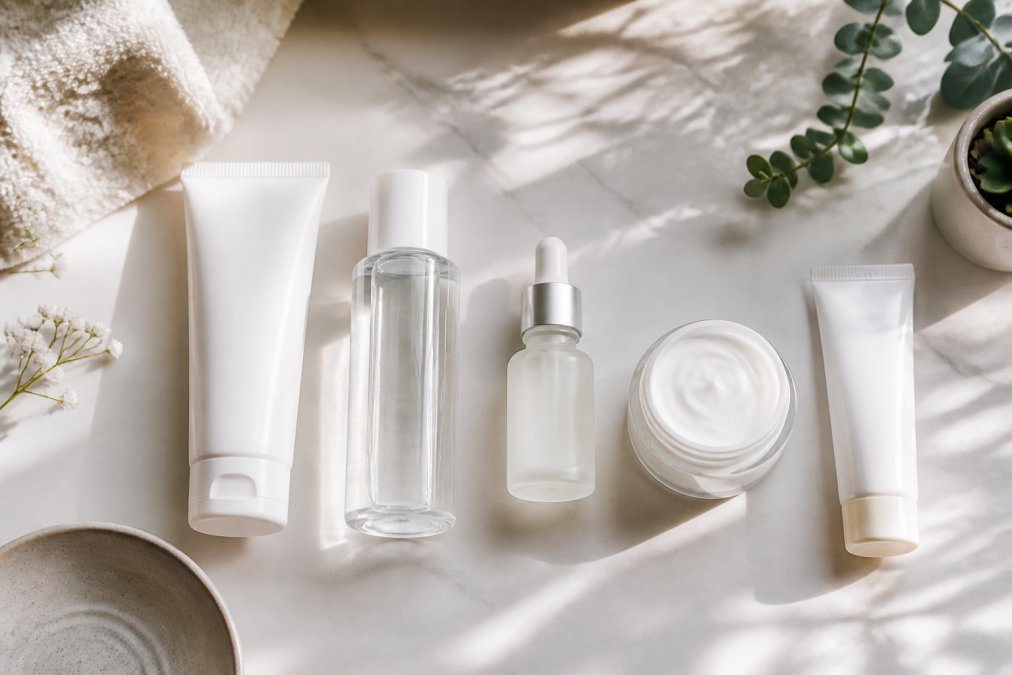
The general rule for skincare routine order for beginners is to apply products from thinnest to thickest consistency. This ensures that lightweight active ingredients penetrate properly before heavier creams create a barrier. A common question is whether toning is essential; while it can help balance pH levels, it is optional for many skin types.
- Cleanser: Removes dirt, oil, and impurities without stripping the skin.
- Toner (optional): Helps balance pH and prep skin for better absorption of subsequent products.
- Serum: Delivers concentrated active ingredients like antioxidants or hyaluronic acid.
- Moisturizer: Hydrates and locks in the benefits of previous steps.
- Sunscreen (morning only): Protects against UV damage and prevents hyperpigmentation.
How to Identify Your Skin Type Before Buying Products
Understanding your skin type is the first step toward choosing effective products. Wash your face with a gentle cleanser, pat dry, and wait 60 minutes without applying anything. Observe how your skin feels: tightness and flaking suggest dry skin, a shiny appearance across the forehead and nose indicates oily skin, and a mix of both points to combination skin.
Skin sensitivity is another factor. If products often cause stinging, redness, or breakouts, you likely have sensitive skin that requires fragrance-free, non-comedogenic formulas. For persistent concerns like acne or hyperpigmentation, consulting a board-certified dermatologist provides clarity that self-assessment cannot guarantee.
Morning vs Evening Skincare Routine Differences
A morning vs evening skincare routine difference comes down to protection versus repair. In the morning, focus on lightweight hydration and sun protection factor (SPF) to shield your skin from environmental stressors throughout the day. In the evening, prioritize treatment and repair, allowing active ingredients like retinoids to work while you sleep.
Morning routine: cleanse, apply antioxidant serum, moisturize, then finish with broad-spectrum sunscreen. Evening routine: cleanse to remove buildup, apply treatment serums, then use a richer moisturizer or emollient to support overnight skin barrier recovery. This division of labor gives your skin exactly what it needs at the right time.
How Long to Wait Between Skincare Steps
Waiting between skincare steps allows active ingredients to absorb without dilution. As a general guideline, wait 30 to 60 seconds between water-based products like toners and serums. For oil-based products, allow a few minutes before applying the next layer.
The most crucial pause occurs after applying prescription retinoids or exfoliants. Waiting 20 to 30 minutes after cleansing before applying these products reduces irritation while maintaining effectiveness (peer-reviewed research). This short interval prevents water from interfering with the active ingredient's absorption.
Choosing Products for Your Skin Concerns and Budget
A successful routine addresses your specific skin concerns without breaking the bank. The key is to understand where to invest your money and where you can save without sacrificing efficacy. A common pattern among dermatologists is to recommend spending more on leave-on treatments (serums) and sunscreen, while keeping cleansers and moisturizers simple and affordable.
Building a Routine by Budget Tier
Instead of a single product list, consider these three budget tiers. Each tier is designed to deliver a complete, functional routine.
Tier 1: The Essentialist (Under $50 for a full routine)
This tier focuses on the non-negotiables: cleanse, moisturize, and protect. You can find highly effective, fragrance-free cleansers and moisturizers with ceramides at any drugstore. The one place to spend a little more is your sunscreen, as a cosmetically elegant formula is more likely to be used daily.
- Cleanser: A gentle, non-foaming gel or cream cleanser. Look for terms like "sulfate-free" on the label.
- Moisturizer: A simple moisturizer with ceramides or squalane to support the skin barrier.
- Sunscreen: A broad-spectrum SPF 30 or higher. This is your primary anti-aging product.
Tier 2: The Targeted Enthusiast (Under $150 for a full routine)
This tier adds a treatment serum to address a specific concern like hyperpigmentation, fine lines, or acne. This is where you can start to see more dramatic results.
- Cleanser: As above.
- Treatment Serum: Choose one based on your primary concern. For dullness or fine lines, a retinol serum is a gold-standard ingredient. For dark spots, a vitamin C serum (in the morning) or a niacinamide serum (morning or night) is effective.
- Moisturizer: As above.
- Sunscreen: As above.
Tier 3: The Advanced Regimen (Over $150 for a full routine)
This tier allows for a more complex routine with multiple serums or a dedicated eye cream. The key is to introduce products one at a time to avoid irritation.
- Cleanser: As above.
- Treatment Serum 1: An antioxidant like vitamin C for daytime.
- Treatment Serum 2: A retinoid or peptide serum for nighttime.
- Moisturizer: A richer formula for nighttime repair.
- Sunscreen: As above.
How to Read an Ingredient Label for Value
Price is not a reliable indicator of quality. The key is to look for the active ingredients and their concentration. Ingredients are listed in descending order of concentration. The first five to seven ingredients make up the bulk of the product.
- Look for the actives: For a serum, the active ingredient (e.g., retinol, niacinamide, vitamin C) should be in the top half of the list. If it's near the bottom, it's likely present in a negligible amount.
- Check for a 'fragrance-free' claim: Fragrance is a common irritant, especially for sensitive skin. Even natural essential oils can cause reactions. The label should say "fragrance-free" or "unscented."
- Understand 'non-comedogenic': This means the product is formulated to not clog pores. It's a helpful claim for acne-prone skin, but it's not a guarantee.
The 'Save vs. Splurge' Rule of Thumb
A practical approach is to save on products that are rinsed off and splurge on products that stay on your skin.
- Save On: Cleansers and wash-off treatments. They are in contact with your skin for a short time, so the delivery system matters less.
- Splurge On: Serums, treatments, and sunscreen. These are designed to penetrate the skin and deliver active ingredients, so the formulation quality is more critical.
Radiant Essence Beauty offers a diverse selection of high-quality options across price ranges, supported by years of industry experience. Our customer-service-oriented approach makes it easy to explore high-quality options without the guesswork, whether you're looking for a budget-friendly cleanser or a high-performance treatment serum.
Common Skincare Mistakes to Avoid
Many people undermine their progress with a few predictable errors. Over-exfoliating is one of the most common mistakes; using physical scrubs or chemical exfoliants more than two to three times per week can damage the skin barrier and increase sensitivity (the American Academy of Dermatology). Another frequent issue is skipping sunscreen indoors or on cloudy days, which allows cumulative UV damage to accelerate collagen breakdown.
Introducing multiple new products at once makes it impossible to identify which one causes a reaction. Patch testing each new product on a small area of skin for several days before full application prevents widespread irritation. Most importantly, give products time to work. Cell turnover takes several weeks, so expect visible changes only after consistent use for at least a month.
The Overlooked Factor: Your Lifestyle and Internal Health
Topical products are only one part of the equation. Your skin is your largest organ, and its health is directly connected to your internal state. A product-only guide misses this crucial angle. Here are the internal and lifestyle factors that can make or break your routine.
1. Sleep and the Skin Barrier
Your skin repairs itself while you sleep. A common pattern is that chronic sleep deprivation leads to increased levels of the stress hormone cortisol, which can break down collagen and increase inflammation. This manifests as dullness, fine lines, and a compromised skin barrier. If you are not getting seven to nine hours of quality sleep, no serum can fully compensate.
2. Diet and Inflammation
What you eat can show up on your face. High-glycemic foods (like white bread and sugary drinks) can spike blood sugar and trigger inflammation, which may exacerbate acne for some people. Conversely, a diet rich in antioxidants (from colorful fruits and vegetables) and healthy fats (like omega-3s from fish or flaxseed) provides the building blocks for a healthy skin barrier.
3. Hydration from the Inside Out
While drinking water is not a substitute for a good moisturizer, chronic dehydration can make your skin look dry and less plump. The goal is to drink enough water so that your urine is a pale yellow color. This supports overall skin health, but it is not a cure-all for dryness caused by a damaged barrier.
4. Stress Management
Stress triggers the release of cortisol, which can increase oil production and lead to breakouts. It also impairs the skin's ability to heal. Incorporating stress-reducing activities like exercise, meditation, or even a short walk can have a direct positive impact on your skin's clarity.
The 'One Variable at a Time' Rule
To truly understand what works for your skin, you must change one thing at a time. This applies to both products and lifestyle changes. If you start a new serum and a new diet at the same time, you will not know which one caused the improvement or the breakout. Give each new variable at least two weeks to show its effect before adding another.
Your Path to Healthier Skin
Building a skincare routine is a personal process that evolves with your skin's changing needs across seasons and life stages. Start with the fundamentals we have covered, identify your skin type, and introduce products gradually while observing how your skin responds. Consistency and patience remain the most important factors in achieving lasting dermatological health.
At Radiant Essence Beauty, we understand that finding products that work for your skin type and concerns takes time. Our customer-service-oriented approach and fast, user-friendly shopping experience make it easy to explore high-quality options without the guesswork. We offer high-quality skincare at accessible prices, so you can build a routine that fits both your skin and your budget.
Browse our curated selection today and find the products that will help your skin look and feel its best. Get started with Radiant Essence Beauty and build a routine you will actually enjoy following.
Frequently Asked Questions
What is the correct order to apply skincare products?
The general rule is to apply products from thinnest to thickest consistency. This allows each layer to absorb properly. A standard order is: cleanser, toner, serum, moisturizer, and sunscreen in the morning. At night, you might use a treatment like a retinoid after serum and before moisturizer. Following this skincare routine order ensures your skin gets the full benefit of each active ingredient.
How do I determine my skin type?
A simple way to identify your skin type is the bare-faced test. Wash your face with a gentle cleanser, pat it dry, and wait for 30 minutes without applying any products. If your skin feels tight, you likely have dry skin. If there's visible shine on your forehead and nose, you have oily skin. Shine only in your T-zone suggests combination skin, while redness or itching can indicate sensitive skin.
How long does it take for a new skincare routine to show results?
Skin cell turnover takes about 28 days, so you should expect to wait at least 4 to 6 weeks to see noticeable changes from a new routine. Hydration and texture improvements can appear sooner, but for concerns like hyperpigmentation or fine lines, it may take 8 to 12 weeks. Be patient and consistent, and introduce only one new product at a time to monitor its effects.
Can I use too many skincare products at once?
Yes. Overloading your skin with too many active ingredients can damage your skin barrier, leading to irritation, redness, and breakouts. Start with a simple routine of cleanser, moisturizer, and SPF. Add one new active product, like a serum, every few weeks. This approach lets you see how your skin reacts and prevents you from overwhelming it.
How often should I exfoliate my skin?
Most skin types benefit from exfoliating 1 to 3 times per week. Over-exfoliating can strip your skin of its natural oils and cause micro-tears. If you use chemical exfoliants like AHAs or BHAs, follow the product instructions. If you have sensitive skin, start with once a week to see how your skin barrier responds before increasing frequency.
Which two serums cannot be used together?
Avoid combining retinoids with direct acids like AHAs or BHAs in the same routine, as this can cause severe irritation. A common practice is to use a vitamin C serum in the morning and a retinoid at night. If you want to use both a retinoid and an acid, apply the acid in the morning and the retinoid in the evening on alternate days.