 how-to
How to Identify Authentic Skincare Products: 2026 Guide
Table of Contents
- Why Authenticity Matters: The Dangers of Counterfeit Skincare
- Step 1: Inspect Packaging Integrity and Print Quality
- Step 2: Verify Batch Codes, Serial Numbers, and Expiration Dates
- Step 3: Use a Skincare Batch Code Checker and Brand Verification Tools
- Step 4: Examine Product Consistency, Smell, and Ingredient Lists
- Step 5: Spot Price Anomalies and Gray Market Sellers
- How to Avoid Fake Beauty Products: Your Authorized Retailer Checklist
- Step 1: Start With the Brand's Own Retailer Locator
- Step 2: Inspect the Seller's About Us and Contact Pages
- Step 3: Check Domain Age and Registration Details
- Step 4: Evaluate the Product Page Itself
- Step 5: Confirm the Seller Can Answer Authentication Questions
- Step 6: Know the Difference Between Authorized, Gray Market, and Counterfeit
- Quick Pre-Purchase Checklist
- What to Do If You Suspect a Counterfeit: Reporting and Recourse
- Frequently Asked Questions
Last Updated: September 11, 2026
Why Authenticity Matters: The Dangers of Counterfeit Skincare
Counterfeit skincare is a formulation problem before it is a moral one. When a product is copied, the label gets reproduced but the preservative system usually doesn't, so bacteria can multiply in a cream that looks and smells normal. This guide walks through checks to identify authentic skincare products.
The scale of the problem is hard to overstate. The FDA's counterfeit medicine and cosmetic warnings documents ongoing seizures of illegally marketed beauty products, and the FTC's consumer guidance on counterfeit goods notes that fake goods frequently reach buyers through third-party marketplace listings that mimic legitimate storefronts.
What separates a real product from a convincing copy comes down to six verifiable signals, plus what to do when a product fails the test.
Step 1: Inspect Packaging Integrity and Print Quality
Authentic packaging is manufactured to a standard counterfeiters rarely match. Genuine cartons use consistent board weight, clean fold lines, and printing that stays sharp under a fingernail; copies feel flimsy or too glossy.
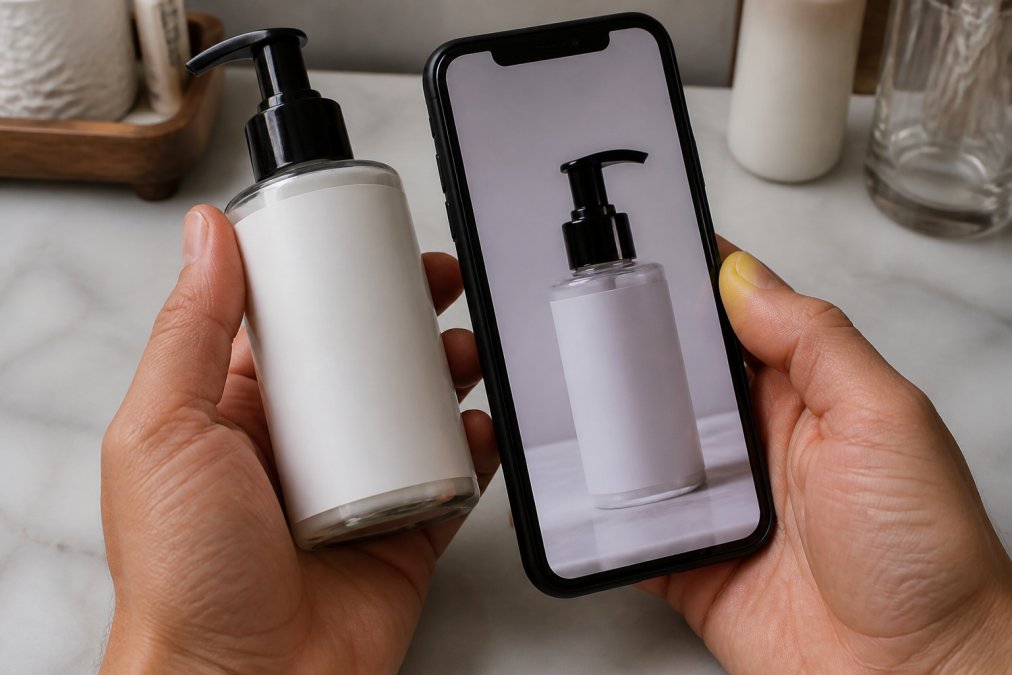
Check the tamper-evident seal first. It should be intact, evenly applied, and difficult to peel in one clean strip. A seal that lifts easily or leaves no residue has likely been reapplied.
Checking Font Alignment, Spelling, and Labeling Errors
Labeling errors are the fastest tell. Hold the label at eye level and look for:
- Inconsistent font weights between the brand name and the product name
- Text that sits crooked against the label edge
- Misspelled ingredients or brand names
- Missing manufacturer address or contact details
- Ingredient lists that do not match the official product page
Legitimate manufacturing standards make spelling errors on regulated cosmetic labels extremely rare, so don't dismiss a single typo.
Step 2: Verify Batch Codes, Serial Numbers, and Expiration Dates
A batch code is a manufacturer's production identifier and the single most useful authentication tool. Every legitimate product carries one, usually stamped or inkjet-printed on the base, crimp, or carton flap, encoding a production date, facility identifier, and run number. The format is brand-specific, so a generic decoder only works if the tool knows that brand's scheme.
Batch code verification databases cross-check the code against the brand's own production records. There are three tiers of tools, and they are not interchangeable:
- Brand-hosted lookup tools. Many major brands publish a lookup page on their official site where you enter the batch code and the tool returns the production date and, in some cases, the intended market. This is the most authoritative source.
- Independent third-party batch code databases. These aggregate decoding rules for hundreds of brands and help when the brand has no public tool. They are not affiliated with the manufacturer, so treat a match as corroborating evidence, not proof. A mismatch is a stronger signal than a match.
- Retailer and marketplace verification portals. Some authorized sellers offer their own batch check. These are only as trustworthy as the seller, so verify the seller first (see the authorized retailer section below).
A practical workflow looks like this:
- Locate the batch code on the base, crimp, or carton flap and photograph it before opening anything.
- Search the brand's official site for a "verify," "authenticity," or "batch code" page and enter the code there first.
- If the brand has no tool, run the code through an independent database and note the returned production date.
- Compare that date against the expiration or period-after-opening (PAO) symbol. A production date that postdates the printed expiration, or is years older than it should be, is a red flag.
- Cross-check the code across the outer box, inner carton, and product itself. Serial numbers on higher-end products should match across all three; any mismatch means the item has been repackaged.
A printed expiration date that rubs off with a thumb is a bad sign; genuine inkjet coding bonds to the surface. Look for the PAO symbol, the open-jar icon with a number and "M" inside, showing how many months the product is good for after opening. Counterfeiters often omit it or misplace it because they copy an older label template.
Step 3: Use a Skincare Batch Code Checker and Brand Verification Tools
A skincare batch code checker decodes the manufacturer's date and facility codes embedded in the printed batch number. Some are free web tools; others are built into brand apps. The most reliable approach is the brand's own verification channel, check the official website for a "verify your product" page or authenticity portal, or scan the QR code if the packaging has one.
How to Scan QR Codes and Barcodes for Authentication
QR codes and barcodes serve different purposes: a barcode identifies the product SKU, while a QR code can link to a brand-hosted verification page confirming the specific unit.
- Scan the QR code and check the destination URL carefully
- Confirm the domain matches the brand's official site, not a lookalike
- Enter the batch code if prompted and compare the returned product details
- Use barcode scanning to confirm the SKU matches the product you ordered
If the QR code redirects to a generic page, a shortened link, or a domain with extra characters, do not proceed.
Step 4: Examine Product Consistency, Smell, and Ingredient Lists
Texture and scent are sensory checks that require a reference point. If you have used the product before, you already know what "normal" looks like.
Counterfeit formulas often show these defects:
- Separation or watery texture where the authentic product is thick
- Gritty particles that do not dissolve
- A synthetic fragrance that smells sharp or chemical rather than balanced
- A color that is slightly off from the original
Viscosity is the most telling physical property: a serum that should glide shouldn't feel like water, and a cream that should hold its shape shouldn't slump in the jar. Compare the ingredient list against the brand's official listing, counterfeiters often copy an older formula, so a mismatch in ingredient order or a missing preservative is a strong signal.
Step 5: Spot Price Anomalies and Gray Market Sellers
A price anomaly is any offer well below the brand's own pricing without a clear reason. Gray market goods are legitimate products sold through unauthorized channels, often without a warranty or quality guarantee.
Ask these questions before you buy:
- Is the seller listed on the brand's official "where to buy" page?
- Does the listing use stock photos instead of the actual product?
- Is the seller's return policy vague or nonexistent?
- Does the price undercut the brand by an amount that makes no business sense?
A third-party marketplace listing with a too-good price and a new seller account is the classic counterfeit setup. Legitimate discounting exists, but it comes with a traceable supply chain.
How to Avoid Fake Beauty Products: Your Authorized Retailer Checklist
An authorized retailer is a seller the brand has formally approved to distribute its products. Buying from one is the single most effective way to avoid fake beauty products, because the supply chain is verified from the manufacturer forward. But "authorized" is a claim anyone can print, so verify it rather than trust it.
Step 1: Start With the Brand's Own Retailer Locator
Most established brands maintain a "where to buy" or "store locator" page on their official domain. Search the brand name plus "authorized retailer" or "where to buy" and open the result on the brand's own domain, not a reseller's page that mentions the brand. If the seller isn't listed, treat it as unauthorized until confirmed otherwise.
Step 2: Inspect the Seller's About Us and Contact Pages
A legitimate retailer is willing to tell you who it is. Open the About Us page and look for:
- A registered business name and physical address, not just a PO box
- A phone number that reaches a person, not a voicemail loop
- A stated return policy with a clear window and process
- A privacy policy and terms of service referencing the same business entity
A seller with no About Us page, only a contact form, and a buried return policy is higher-risk. Cross-check the business name against your state's business registration database or the Better Business Bureau to confirm the entity exists and how long it has operated.
Step 3: Check Domain Age and Registration Details
Domain age is one of the most underused signals. A storefront claiming years of experience but registered a few months ago is a contradiction worth investigating; check the registration date via a public WHOIS lookup. A new domain isn't automatically fraudulent, but combined with deep discounts and stock photography it fits the classic counterfeit profile. Also note whether the domain hides the registrant behind privacy protection, common for legitimate small businesses, but also for throwaway storefronts.
Step 4: Evaluate the Product Page Itself
- Does the page use the brand's own product photography, or generic stock images?
- Is the description copied verbatim from the brand's site, including its marketing language?
- Does the listing show the actual batch code or offer verification on request?
- Are reviews specific to the product, or generic praise that could apply to anything?
- Is there pressure to buy, countdown timers, "only 2 left," or limited-time claims that reset on reload?
Step 5: Confirm the Seller Can Answer Authentication Questions
Before you buy, ask customer service two questions: where the product ships from, and whether they can provide the batch code before purchase. An authorized retailer can answer both; a dropshipper or gray-market seller usually cannot.
Step 6: Know the Difference Between Authorized, Gray Market, and Counterfeit
These are not the same thing, and the distinction matters for your recourse:
- Authorized: The brand has approved the seller. Full warranty and quality guarantee apply.
- Gray market: Genuine product sold through unauthorized channels. It may be real, but it can be diverted stock, near-expiry inventory, or product intended for a different market with different labeling requirements. The brand's warranty often does not apply.
- Counterfeit: Fake product. No warranty, no guarantee, and a real safety risk.
Gray market goods are hardest to spot because the product itself may be genuine. The tell is usually the channel, not the item, an unauthorized seller, an unexplained price cut, and no brand-backed return path.
Quick Pre-Purchase Checklist
- Seller appears on the brand's official retailer locator
- About Us page names a real business entity and address
- Domain age is consistent with the seller's claimed history
- Product page shows the brand's own product photography
- Return policy is stated clearly and matches the brand's terms
- Seller provides a batch code or verification method on request
- Customer service can answer ingredient and sourcing questions
- Reviews reference the actual product, not generic praise
- No pressure tactics, countdown timers, or "limited stock" claims
Radiant Essence Beauty offers a customer service team that can answer authentication questions. That transparency is the whole point of buying from a retailer you can reach.
What to Do If You Suspect a Counterfeit: Reporting and Recourse
Report the product rather than quietly throwing it away. Consumer protection systems only work when buyers flag bad actors.
- Stop using the product immediately, especially if you have sensitive skin.
- Photograph the packaging, batch code, and seller listing.
- Contact the brand directly through its official website and report the batch code.
- File a report with the FTC's ReportFraud portal.
- Report the listing to the marketplace where you bought it.
- If you paid by card, request a chargeback for goods not as described.
Keep your order confirmation and any messages with the seller, those records make a chargeback or complaint stick.
Counterfeit skincare is a supply chain problem, and the only reliable defense is buying from a retailer that controls its own sourcing. Radiant Essence Beauty offers a fast, user-friendly shopping experience with customer service that answers authentication questions directly, backed by years of industry experience and accessible pricing. Shop with confidence that every product you receive is the real thing.
Frequently Asked Questions
How do I check if my skincare product is authentic?
Start by inspecting the packaging for print quality, font alignment, and spelling errors. Check for a batch code, serial number, or QR code, and verify it on the brand's official website or a skincare batch code checker. Look for a tamper-evident seal and an expiration date. If the price seems too low or the seller is not an authorized retailer, be cautious. When in doubt, contact the brand directly or avoid using the product.
Is there a website that can check the authenticity of a product?
Many brands offer official verification portals on their websites where you can enter a batch code or scan a QR code. Third-party batch code checkers also exist, but they may not cover all brands. For the most reliable results, use the brand's own site or contact their customer service. Some apps like those from beauty retailers can also help verify authenticity by scanning barcodes.
What are the common signs of counterfeit skincare packaging?
Common signs include misspelled words, blurry or misaligned printing, cheap-feeling materials, missing batch codes or expiration dates, and packaging that differs slightly in color or font from the authentic version. Counterfeit products often lack a tamper-evident seal or have one that is easily peeled off. If the packaging feels flimsy or the label is crooked, it's a red flag.
Why is it dangerous to use counterfeit skincare products?
Counterfeit skincare can contain harmful ingredients like mercury, lead, or unknown synthetic chemicals that can cause allergic reactions, burns, infections, or long-term skin damage. They may also be contaminated with bacteria due to poor manufacturing standards. Using fake products can worsen acne, trigger eczema, or lead to serious dermatological issues. Always buy from authorized retailers to protect your skin and health.