 ultimate-guide
How to Verify Authentic Skincare Products in 2026
Table of Contents
- How Counterfeit Skincare Gets Into Your Cart
- How to Spot Fake Beauty Products: 7 Packaging Red Flags
- How to Check Batch Codes on Skincare (Step by Step)
- Verify Authentic Skincare Products With QR Codes and NFC
- The Dangers of Counterfeit Skincare: What's Actually in the Bottle
- Authorized Retailers vs. Third-Party Marketplaces
- How to Report Fake Products and Safely Dispose of Them
- Conclusion: Make Verification a Habit
- Frequently Asked Questions
Last Updated: October 1, 2026
How Counterfeit Skincare Gets Into Your Cart
Counterfeit skincare is a fake product manufactured and packaged to imitate a real brand, often sold through unauthorized channels where quality controls do not exist. According to the FDA's counterfeit medicine and cosmetic warning resources, these products can contain unlisted ingredients, harmful contaminants, and no reliable safety oversight. What makes the problem worse is how ordinary the buying experience looks.
Then the product arrives, and something is slightly off.
How to Spot Fake Beauty Products: 7 Packaging Red Flags
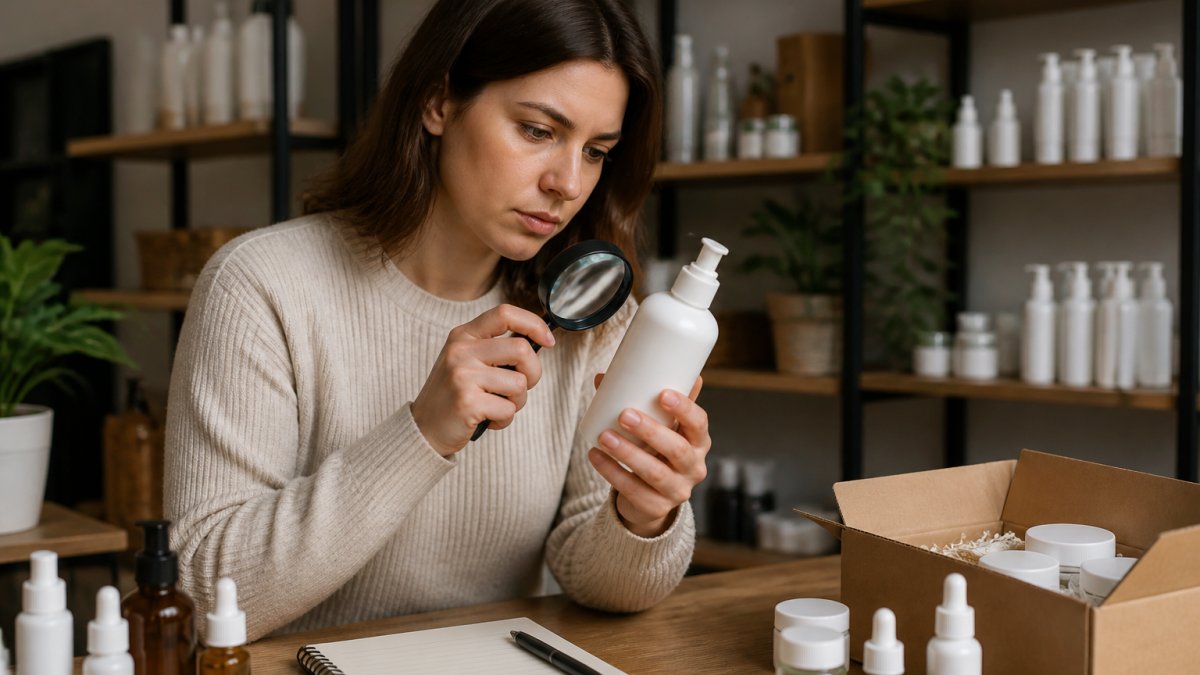
Learning how to spot fake beauty products starts with the box and bottle, because counterfeiters rarely replicate packaging perfectly. Check these seven details under bright light:
- Font consistency. Letters should be uniform in weight and spacing. Fakes often mix fonts or blur small print.
- Misspelled words. Scan the entire label, including ingredient lists and manufacturer addresses.
- Crooked or peeling labels. Genuine brands apply labels with precise alignment.
- Missing batch code or serial number. Every legitimate product carries one.
- Weak or copied holographic sticker. Tilt it; real holograms shift color and show depth.
- Flimsy packaging integrity. Thin cardboard, uneven seams, and loose caps signal trouble.
- No tamper-evident seal. A broken or absent seal means the product may have been opened.
Suspicious Pricing and Gray Market Listings
Gray market products are genuine goods sold outside a brand's official distribution agreements, and they often sit next to outright fakes. A price that looks too generous is the first clue: when a serum that normally sells at full retail appears at a fraction of that price from an unfamiliar seller, treat it as a warning. Check whether the seller is listed on the brand's official retailer page; if not, you cannot confirm the supply chain behind that bottle.
How to Check Batch Codes on Skincare (Step by Step)
How to check batch codes on skincare comes down to finding the code, decoding it, and confirming it against the brand's records. A batch code is a short alphanumeric string identifying when and where a product was made. Here is the process:
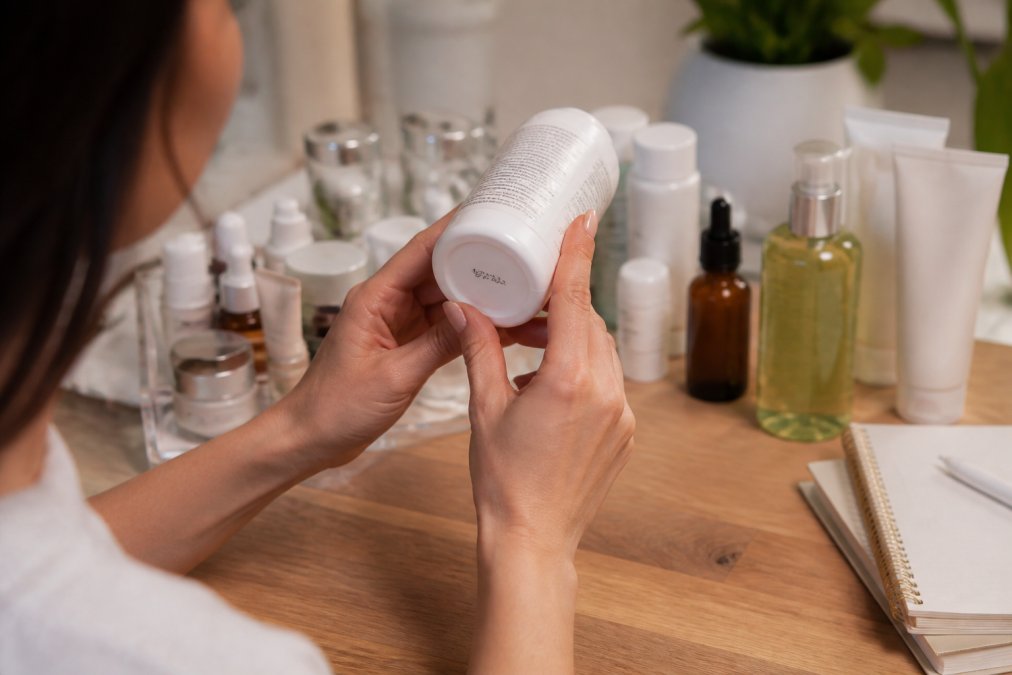
- Find the code. Look on the bottom of the bottle, the crimp of a tube, or the back of the outer box. It is usually printed or stamped, not part of the design.
- Photograph it. Good lighting helps, especially on curved or reflective surfaces.
- Visit the brand's official website. Most brands host a batch code lookup tool or a contact form.
- Enter the code exactly. Watch for similar characters like
0andO, or1andI. - Check the shelf life. The result should show a production date and an expiration window.
- Compare against the label. If the printed expiration date conflicts with the decoded one, the product is suspect.
Verify Authentic Skincare Products With QR Codes and NFC
To verify authentic skincare products with modern tools, scan the QR code or tap the NFC chip on the packaging and confirm the result lands on the brand's own domain. QR codes link to a verification page; NFC chips are wireless tags embedded in the label that communicate with your phone. Both add traceability a printed label cannot provide.
Three habits keep these checks reliable:
- Check the domain. A scan that opens a lookalike site is a red flag, not a confirmation.
- Watch for reused codes. Some fakes copy a single genuine code across thousands of units. If the verification page warns the code has already been scanned many times, be suspicious.
- Treat a missing chip as neutral. Not every brand uses NFC yet, so its absence is not proof of a fake.
The Dangers of Counterfeit Skincare: What's Actually in the Bottle
Most guides stop at "fakes can be dangerous." That warning is true but useless on its own. Counterfeit manufacturing skips the quality controls legitimate brands build into every batch: raw-material testing, preservative efficacy testing, stability testing, and microbial challenge testing. When those steps disappear, four categories of problems show up again and again.
How to Tell a Contamination Reaction From Ordinary Irritation
The bottom line: the danger is a specific set of contaminants, at uncontrolled concentrations, in a formula no one tested. That is why verification matters more than price, packaging, or reviews.
Authorized Retailers vs. Third-Party Marketplaces
Authorized retailers buy directly from the brand or its official distributors and store products under the conditions the manufacturer specifies. Third-party marketplaces host independent sellers, and that openness is where diversion and fraud thrive: a diverted product may be genuine but stored improperly, past its shelf life, or repackaged.
How to Report Fake Products and Safely Dispose of Them
Most guides tell you to avoid counterfeits and stop there, skipping the two things that actually reduce harm: reporting the seller so the listing comes down, and disposing of the product so no one else uses it. Here is the full workflow.
Reporting a Counterfeit Seller
You have several reporting paths, and using more than one increases the odds of action. Each agency and platform wants slightly different information, so gather it once and reuse it.
What to collect before you report:
- Order confirmation and receipt (screenshot or PDF)
- Photos of the product, packaging, batch code, and any tamper seal
- The seller's listing URL and seller name
- The brand's response if you contacted them
- A short written timeline: when you bought, when it arrived, what was wrong
Where to file:
- The brand. Contact the brand's customer service or anti-counterfeit team directly. Brands track counterfeit sellers and often pursue takedowns and, in some cases, legal action. They may ask you to send the product in for analysis.
- The Federal Trade Commission. The FTC guidance on reporting fraudulent products and sellers explains that consumers can file complaints about deceptive sellers at ReportFraud.ftc.gov. The FTC does not resolve individual cases, but complaints feed into broader enforcement actions against sellers and platforms.
- The FDA. The FDA accepts reports about cosmetics that may be adulterated, misbranded, or harmful through its MedWatch program and cosmetic complaint portal. This is the right channel when the concern is a health hazard rather than a refund.
- The marketplace itself. If you bought through a third-party marketplace, use its "report this listing" or "report a seller" tool. Include the words "counterfeit" and "brand" in the report; those keywords route the ticket to the right team faster than a generic "item not as described" complaint.
- Your payment method. If the seller refuses a refund, a chargeback through your credit card issuer is often the fastest route to recovery. Keep your documentation; issuers typically require it.
Disposing of a Counterfeit Safely
Do not donate, resell, gift, or use it "just to finish the bottle." Every one of those options puts a potentially contaminated product on someone's skin.
- Stop using it immediately. Do not finish the bottle to avoid waste.
- Empty the contents into the trash, not the sink or toilet. The ingredients may be unsafe for waterways, and some contaminants should not be flushed.
- Do not puncture or burn aerosol or pressurized containers. Follow your local household hazardous waste rules for those.
- Deface the label. Scratch off or marker over the batch code and brand name so no one mistakes the empty container for a genuine product.
- Recycle the packaging only if your local program accepts cosmetic containers. Rinse rigid plastic and glass first; leave pumps and mixed-material components out if your program does not take them.
- If the product is a suspected health hazard, ask your local household hazardous waste facility whether it accepts cosmetics. Many do, and it is the safest option when you are unsure.
| Problem | Immediate Fix | Why It Matters |
|---|---|---|
| Untraceable batch code | Stop using; report to brand | No proof of legitimate manufacture |
| Suspicious price | Buy from authorized seller | Gray market and fakes cluster here |
| Broken tamper seal | Discard; request refund | Product may have been opened |
| QR scan to unknown site | Do not enter data | Lookalike pages harvest info |
| Reaction after use | Stop, photograph, see a provider | Contamination may need medical care |
| Seller refuses refund | File chargeback with card issuer | Fastest route to recovery |
Conclusion: Make Verification a Habit
Counterfeits keep improving, so a single check is never enough. Build a routine: buy from authorized sellers, scan the code, confirm the batch, and inspect the seal before first use.
Frequently Asked Questions
How do I check if my skincare product is original?
Start with the batch code and serial number on the packaging. Check for a tamper-evident seal, consistent font on the label, and a holographic sticker if the brand uses one. Scan any QR code or NFC chip with your phone to see if it leads to the brand's official verification page. If the price is far below retail, the seller is not an authorized retailer, or the packaging feels flimsy, treat it as suspect. When in doubt, contact the brand directly with the batch code before using the product.
What are the common signs of counterfeit skincare packaging?
Watch for misspelled words, blurry or crooked printing, mismatched fonts, and labels that peel easily. Counterfeit boxes often use thinner cardboard, and the ingredient list may be incomplete or formatted differently from the authentic version. A missing batch code, serial number, or expiration date is a major red flag. Also check whether the packaging integrity holds up: a loose cap, a seal that looks resealed, or a pump that feels loose can all point to tampering or a fake.
Why is it dangerous to use fake skincare products?
Counterfeit skincare can contain toxic ingredients like mercury, lead, or high concentrations of steroids that cause skin thinning, rashes, and long-term damage. Because fakes are made outside official manufacturing standards, they also risk microbial contamination that leads to infections. Even if a fake looks and smells like the real product, the ingredient list on the box may not match what is actually inside. If you suspect a reaction, stop using the product and see a dermatologist.
How can I tell if a beauty website is an authorized retailer?
Check the brand's official website for a store locator or authorized retailer list. Authorized sellers usually display the brand's logo with permission, list a physical business address, and offer a real return policy. Be cautious of third-party marketplaces where the seller name changes frequently or where prices are dramatically lower than the brand's own site. If a retailer cannot confirm official distribution when you ask, buy directly from the brand or a verified seller instead.