 ultimate-guide
Skincare Routine for Combination Sensitive Skin
Table of Contents
- Understanding Combination Sensitive Skin
- Ingredients to Avoid for Sensitive Skin
- Morning vs Evening Skincare Routine Steps
- How to Patch Test New Skincare Products
- Choosing the Right Cleanser and Moisturizer for Combination Sensitive Skin
- Barrier Repair and Multi-Masking for Stubborn T-Zones
- Lifestyle and Environmental Triggers That Flare Reactive Skin
- Frequently Asked Questions
Last Updated: September 25, 2026
Understanding Combination Sensitive Skin
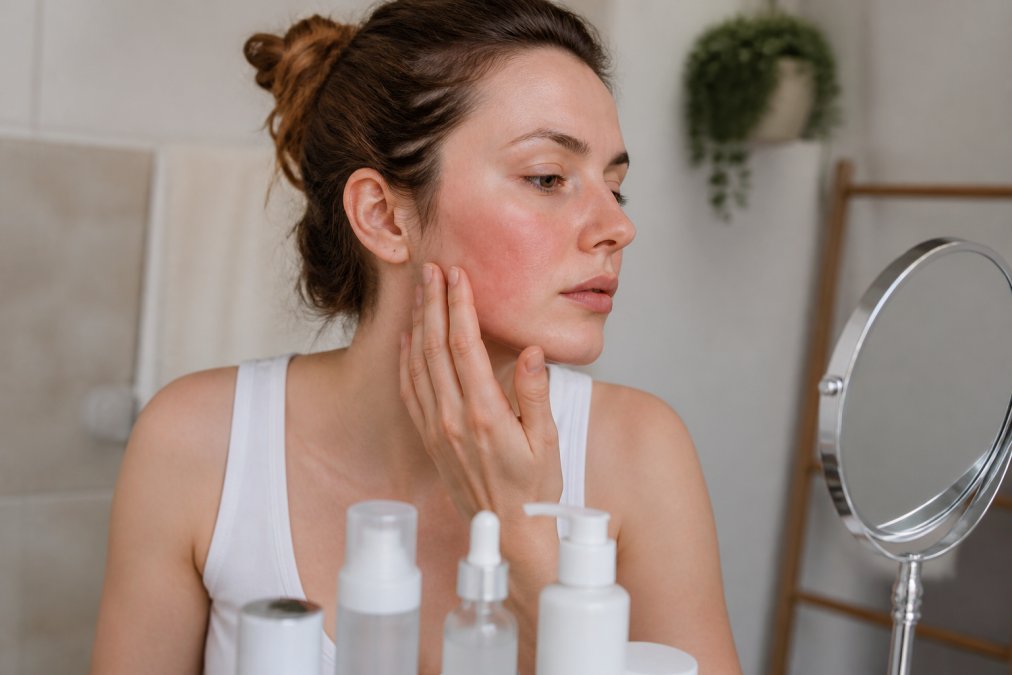
Combination sensitive skin is a skin type that produces excess oil in the T-zone while feeling dry, tight, or reactive on the cheeks and jawline. According to American Academy of Dermatology guidance on skin types, this dual behavior makes routine-building trickier than treating oily or dry skin alone. This guide breaks down a skincare routine for combination sensitive skin that addresses both problems at once, without stripping your barrier or triggering redness.
How to Tell If You Have Both Oily and Reactive Skin
Look for shine across the forehead, nose, and chin within a few hours of cleansing, paired with cheeks that sting, flush, or flake when you apply active ingredients. A common mistake is treating the oily zone with harsh astringents while ignoring the dry patches, which pushes sebum production into overdrive. If your skin reacts to fragrance, feels tight after washing, and still breaks out along the T-zone, you likely have both concerns.
Ingredients to Avoid for Sensitive Skin
The fastest way to calm reactive skin is to remove the ingredients that provoke it. Dermatologists consistently flag fragrance, drying alcohols, and physical scrubs as the top offenders for a compromised lipid barrier.
Common Triggers: Fragrance, Alcohol, and Harsh Exfoliants
- Synthetic fragrance and essential oils: common causes of contact irritation and redness
- Denatured alcohol: strips the skin and accelerates trans-epidermal water loss
- Walnut shell and coarse sugar scrubs: create microtears and worsen sensitivity
- High-concentration acids used daily: overwhelm a reactive skin sensitivity threshold
Morning vs Evening Skincare Routine Steps
Splitting your routine by time of day lets you protect during the day and repair at night. This is the structure most dermatologists recommend for combination sensitive skin, and it keeps the oily zone balanced without over-treating the dry areas.
Your Morning Routine: Protect and Balance
- Rinse with lukewarm water or a pH-balanced, non-stripping cleanser.
- Apply a water-based moisturizer with niacinamide to balance oil in the T-zone.
- Pat a fragrance-free, mineral sunscreen over the full face as your daily SPF.
Your Evening Routine: Repair and Replenish
- Remove sunscreen and makeup with micellar water or a gentle double cleanse.
- Apply a ceramide-rich moisturizer to support barrier repair overnight.
- Use a low-strength retinoid or gentle exfoliant two nights a week, not nightly.
| Step | Morning | Evening |
|---|---|---|
| Cleanse | Rinse or gentle cleanser | Micellar water + cleanser |
| Treat | Niacinamide serum | Retinoid (2x weekly) |
| Moisturize | Water-based, lightweight | Ceramide cream |
| Protect | Mineral SPF 30+ | Barrier repair focus |
How to Patch Test New Skincare Products
A patch test is a 24 to 48 hour trial of a new product on a small area of skin before you apply it to your full face. It is the single most reliable way to avoid a reaction, especially when you have combination sensitive skin.
Choosing the Right Cleanser and Moisturizer for Combination Sensitive Skin
The right cleanser removes oil without stripping, and the right moisturizer hydrates without clogging. For most people with this skin type, that means a sulfate-free, non-comedogenic formula paired with a humectant-and-ceramide moisturizer, but the specifics matter more than the label claims.
What to Look for in a Cleanser
Surfactants are the ingredients that do the cleaning, and they are not all equal. Harsh surfactants like sodium lauryl sulfate (SLS) and sodium laureth sulfate (SLES) strip the lipid barrier and leave reactive cheeks tight and stinging. Gentler options include:
- Glucoside surfactants (decyl glucoside, coco-glucoside), very mild, good for reactive skin
- Amino acid surfactants (sodium cocoyl glycinate, sodium lauroyl sarcosinate), effective on oil, low irritation potential
- Cocamidopropyl betaine, a common secondary surfactant that boosts foam without harshness
What to Look for in a Moisturizer
Moisturizers contain three functional categories of ingredients, and combination sensitive skin often needs all three, just in different proportions across zones:
- Humectants (glycerin, hyaluronic acid, panthenol) pull water into the skin. They are lightweight and suit the T-zone.
- Emollients (squalane, caprylic/capric triglyceride, fatty alcohols like cetyl alcohol) soften and smooth. They suit dry, flaky cheeks.
- Occlusives (petrolatum, dimethicone, shea butter) seal in water and block water loss. Use them sparingly on the T-zone to avoid congestion.
Reading Labels Without Getting Fooled
'Fragrance-free' and 'unscented' are not the same thing. Unscented products may contain masking fragrances to hide the smell of raw ingredients. 'Hypoallergenic' is a marketing term with no legal definition, so it does not guarantee a product will not irritate you. 'Non-comedogenic' is more useful because it reflects testing for pore-clogging potential, though it is not standardized either.
A Simple Product-Selection Framework
| Concern | Cleanser | Moisturizer |
|---|---|---|
| Oily T-zone, reactive cheeks | Gel or gel-cream, amino acid surfactants | Lightweight humectant lotion full-face + emollient cream on cheeks |
| Very reactive, easily flushed | Cream or milk cleanser, no foaming agents | Fragrance-free cream with ceramides and panthenol |
| Congestion-prone T-zone | Salicylic acid cleanser 2-3x weekly, gentle gel otherwise | Oil-free gel with niacinamide |
Start with the gentlest option that still cleans effectively, and only add actives once your barrier feels stable. Most people with combination sensitive skin do better with two simple products used consistently than with a ten-step routine that changes every week.
Barrier Repair and Multi-Masking for Stubborn T-Zones
Most guides treat combination sensitive skin as two separate problems, oil here, dryness there, and hand you two separate products. The more useful framing is that both zones are downstream of one issue: a compromised skin barrier. When the lipid barrier is weakened, the T-zone overproduces oil to compensate for perceived dryness, and the cheeks react to almost everything. Fix the barrier first, and both zones calm down.
Why the Barrier Matters More Than Any Single Product
The skin barrier is the outermost layer of the epidermis, made of corneocytes (skin cells) held together by a lipid matrix of ceramides, cholesterol, and free fatty acids. When that matrix is depleted, by harsh cleansers, over-exfoliation, hot water, or UV exposure, water escapes and irritants get in. The result is the classic combination-sensitive pattern: shiny forehead, tight cheeks, and redness that flares unpredictably.
Key barrier-supporting ingredients to look for:
- Ceramides (especially ceramide NP, AP, and EOP), replace the lipids that hold the barrier together
- Cholesterol and fatty acids, work synergistically with ceramides; the ideal ratio is roughly 1:1:1, though most consumer products do not disclose exact ratios
- Niacinamide, supports ceramide synthesis and helps regulate sebum in the T-zone
- Panthenol (provitamin B5), soothes and supports barrier recovery
- Centella asiatica and madecassoside, calming botanicals often used in barrier-repair formulas
Multi-Masking: Treating Each Zone on Its Own Terms
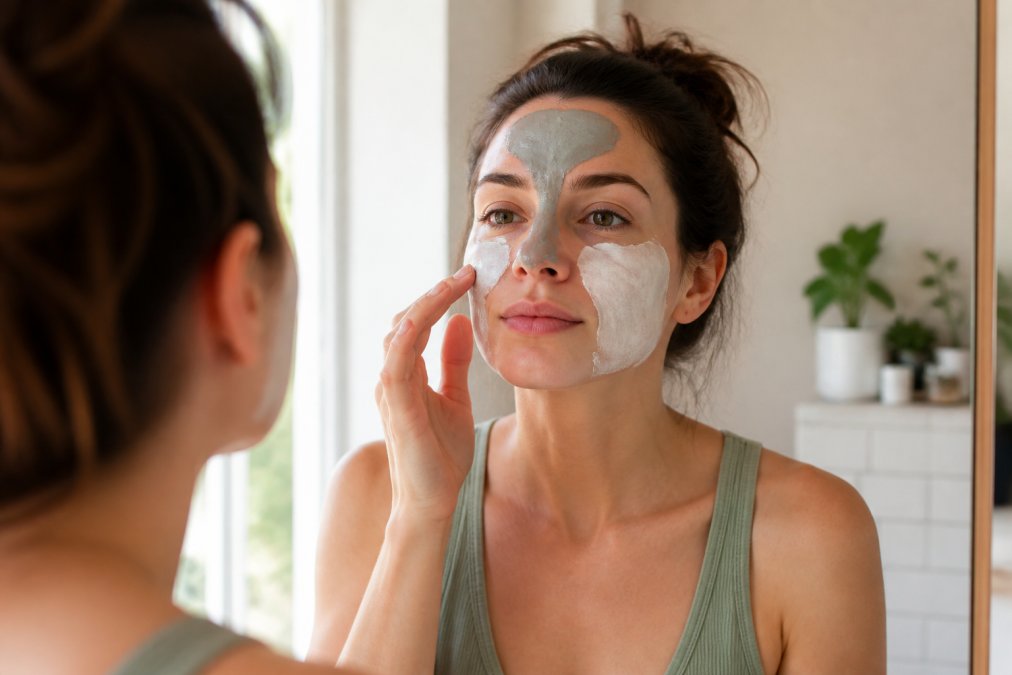
Multi-masking is the practice of applying different masks to different zones of the face at the same time. It is the most effective technique for combination sensitive skin because it treats oily and dry areas separately instead of forcing one product to do both jobs.
A practical multi-masking routine:
- Cleanse gently and pat dry. Do not exfoliate before masking, it increases reactivity.
- Apply a clay or charcoal mask to the T-zone only. Kaolin and bentonite are the most common clays; kaolin is gentler and better suited to sensitive skin. Leave on for 5 to 10 minutes, not until it cracks.
- Apply a hydrating mask to the cheeks and jawline. Look for glycerin, hyaluronic acid, panthenol, or oat extract. Cream and sheet masks work well here.
- Rinse both with lukewarm water and follow immediately with a ceramide moisturizer to seal in hydration.
When to Skip Multi-Masking
Multi-masking is not right for everyone. If your skin is currently in a reactive flare, stinging, flushing, or peeling, skip the clay entirely and use a single soothing mask on the full face. Barrier repair comes first; zone-specific treatment comes second. Once your skin is stable, multi-masking becomes a useful weekly tool rather than a rescue attempt.
Lifestyle and Environmental Triggers That Flare Reactive Skin
Heat, humidity swings, hard water, and stress all push reactive skin past its sensitivity threshold. Many people blame their products when the real trigger is environmental or lifestyle-related.
- Dry indoor air: increases trans-epidermal water loss and flaking
- Hot showers and steam: dilate capillaries and worsen redness
- High-sugar diets: linked to increased sebum production and comedones
- Poor sleep and stress: slow barrier repair and prolong irritation
Frequently Asked Questions
What is the best skincare routine for combination sensitive skin?
A routine that treats your oily T-zone and dry cheeks differently while staying gentle. Start with a pH-balanced, fragrance-free cleanser, follow with a lightweight water-based moisturizer on oily areas and a richer emollient on dry patches, and finish with daily SPF. Twice a week, use a gentle exfoliant with niacinamide or hyaluronic acid to support your lipid barrier without triggering redness.
What ingredients should I avoid for combination sensitive skin?
Skip denatured alcohol, synthetic fragrance, essential oils like citrus and peppermint, and harsh physical scrubs with walnut or apricot kernels. These strip your lipid barrier and raise your skin sensitivity threshold, causing reactive skin to flush and sting. Also avoid high-concentration acids used daily. Look for non-comedogenic, gentle formulas with ceramides, niacinamide, and soothing agents instead.
How do I patch test new skincare products before using them on my face?
Apply a small amount to your inner forearm or behind your ear, then wait 24 to 48 hours. If no redness, itching, or bumps appear, test a dime-sized amount on your jawline for another 24 hours. This two-step method catches most reactions before they hit your full face. Always patch test one new product at a time so you know exactly what caused a reaction.
How often should I exfoliate combination sensitive skin?
Once or twice a week is enough for most people with combination sensitive skin. Use a chemical exfoliant like lactic acid or mandelic acid, which have larger molecules that sit on the surface and cause less irritation than glycolic acid. Physical scrubs and daily exfoliation increase trans-epidermal water loss and can trigger redness, so space out your sessions and skip exfoliating on days your skin feels reactive.
Can I use the same moisturizer on my oily T-zone and dry cheeks?
You can, but a multi-moisturizer approach often works better. Use a lightweight, water-based moisturizer with hyaluronic acid on your T-zone to avoid pore congestion, and a richer emollient with ceramides on your cheeks to repair the lipid barrier. This balances oil production and hydration without making either area worse. If you prefer one product, choose a gel-cream formula that is non-comedogenic and fragrance-free.
What is the 4-2-4 cleansing method and is it safe for sensitive skin?
The 4-2-4 method involves four minutes of oil-based cleansing, two minutes of water-based cleansing, and four minutes of rinsing. While it can help remove makeup and sebum thoroughly, the extended massage time may irritate reactive skin. If you want to try it, use fragrance-free, non-stripping formulas and limit it to once a week. Most people with combination sensitive skin do better with a simple double cleanse using micellar water followed by a gentle gel cleanser.