 ultimate-guide
Why Are Online Beauty Prices Cheaper? 2026 Guide
Table of Contents
- The Real Reasons Online Beauty Prices Are Lower
- What Are the Benefits of Buying Skincare Online?
- How to Avoid Fake Beauty Products When Shopping Online
- Online Beauty Shopping Safety Tips for Every Order
- Hidden Costs and Trade-Offs of Buying Beauty Online
- Online vs. In-Store Beauty Shopping: Pros and Cons
- Frequently Asked Questions
Last Updated: September 23, 2026
The Real Reasons Online Beauty Prices Are Lower
Online beauty prices are cheaper primarily because e-commerce retailers skip the overhead costs that physical stores must charge for. No rent, no in-store staff, and no shelf-space limits mean lower operating expenses per product.
This guide from Radiant Essence Beauty breaks down exactly where those savings come from, how to spot counterfeit products, and when buying in-store still makes sense. But first, here's what most shoppers get wrong: the biggest price gap isn't always about quality. It's about structure.
No Rent, No Retail Staff: Cutting Overhead Costs
A brick-and-mortar beauty store pays rent, utilities, and a full sales team before selling a single item. Those costs get baked into every retail markup on the shelf.
Online retailers replace that storefront with a warehouse and a website. Warehousing costs far less per square foot than prime retail space, and a single fulfillment team can process orders for thousands of customers. When overhead costs drop, profit margins can stay healthy at lower price points.
This is why online beauty prices can undercut department store pricing without sacrificing product quality.
Direct-to-Consumer Models and Supply Chain Efficiency
Direct-to-consumer brands sell straight from the manufacturer or distributor to the buyer. Cutting out wholesalers and retail middlemen removes at least one layer of markup from the supply chain.
Supply chain efficiency compounds the savings. Bulk purchasing, centralized warehousing, and simplified e-commerce logistics reduce the cost per unit. A product that passes through three hands before reaching a shelf carries three markups. A DTC order carries one.
What Are the Benefits of Buying Skincare Online?
The benefits of buying skincare online start with price transparency and selection. Shoppers can compare dozens of products side by side, read ingredient lists, and check reviews before committing.
Selection is the second advantage. A physical store stocks what fits its shelf space. An online retailer can carry niche brands, professional-grade formulas, and specialty products that never make it to a local counter. For mature skin or specific concerns, that variety matters.
Convenience rounds out the list. No commute, no pushy sales floor, and reorders take seconds. Many shoppers also find that online retailers offer loyalty programs and discount strategies that physical stores can't match.
How to Avoid Fake Beauty Products When Shopping Online
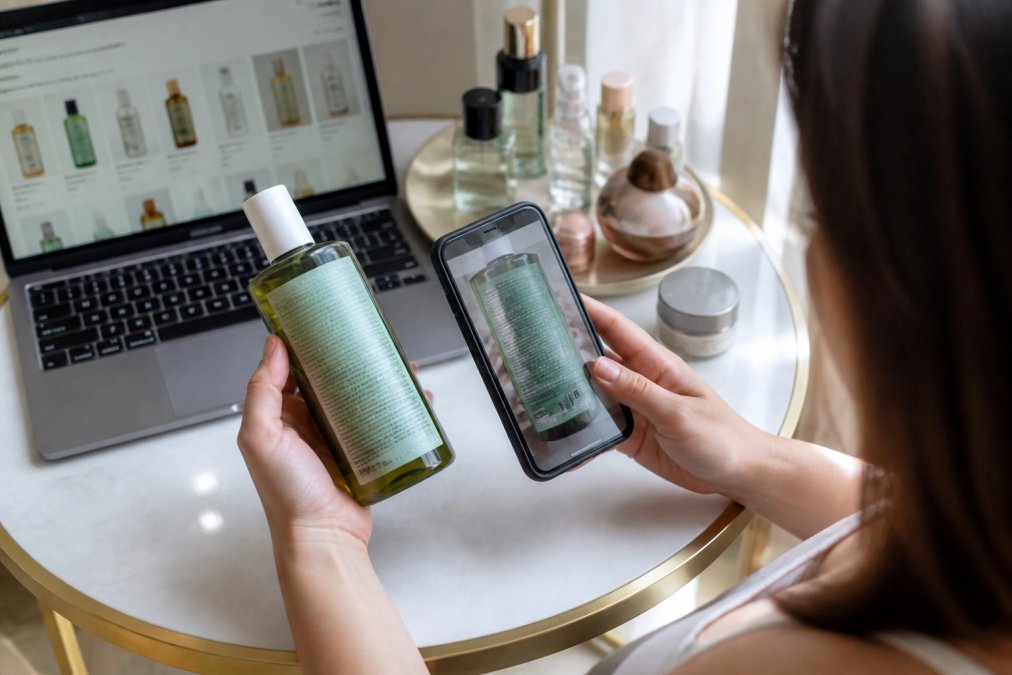
The most reliable way to avoid fake beauty products is to buy only from retailers you can verify, and to understand how counterfeits actually enter the supply chain.
How to Verify a Seller Before You Buy
- Check whether the brand lists the retailer as an authorized seller on its own website. Most established beauty brands publish an authorized retailer list.
- Look for a real customer service channel, a phone number or live chat, not just a contact form.
- Confirm the seller has a published return policy that covers opened products, since authenticity disputes usually surface after use.
- Read the seller's reviews specifically for mentions of batch codes, packaging differences, or unusual textures and scents.
- Be skeptical of listings that use stock photography only, with no original product images.
How to Verify the Product When It Arrives
- Check the batch code printed on the carton or bottle against the brand's own batch lookup tool, if one is offered.
- Compare the expiration or period-after-opening symbol to what the brand publishes for that product.
- Inspect the packaging for mismatched fonts, blurry printing, missing trademarks, or a label that peels unevenly.
- Photograph the product and packaging immediately on arrival, before opening, in case you need to file a dispute.
Product authenticity is also a regulatory issue. Cosmetics sold in the United States fall under FDA oversight, and the Modernization of Cosmetics Regulation Act (MoCRA) expanded requirements for facility registration and adverse event reporting (the FDA). That framework applies to legitimate products, counterfeits sit entirely outside it, which means no one is accountable if something goes wrong.
Online Beauty Shopping Safety Tips for Every Order
Online beauty shopping safety tips come down to a few habits that protect every purchase. The first is checking the retailer's contact information and return process before you buy.
- Pay with a method that offers fraud protection
- Keep your order confirmation and tracking details
- Photograph damaged items immediately on arrival
- Confirm the retailer ships from a verifiable location
- Watch for restocking fees buried in the return policy
Hidden Costs and Trade-Offs of Buying Beauty Online
Lower sticker prices don't always mean a lower total cost. Shipping, return logistics, restocking fees, and real-time price changes can close the gap fast, and most shoppers never factor them in until they've already paid.
Here's where the math changes:
| Cost Factor | In-Store | Online |
|---|---|---|
| Sticker price | Higher | Lower |
| Shipping | None | Often free over a threshold, otherwise $5-$10 |
| Returns | Free, in person | May require return shipping |
| Restocking fees | Rare | Common on opened beauty items |
| Time cost | Commute and browsing | Minutes online |
| Try-before-buy | Yes | Rarely |
| Price stability | Fixed for the season | Can change daily |
Return Logistics: The Cost Nobody Prices In
Return shipping is the single most underestimated cost of buying beauty online. A foundation that arrives two shades too dark, or a moisturizer that breaks out your skin, is not a free exchange the way it is at a counter. Many online beauty retailers either exclude opened cosmetics from returns entirely or charge a restocking fee, often 15% to 25% of the item price, to cover the cost of not being able to resell the unit.
Dynamic Pricing: Why the Same Product Costs Different Amounts on Different Days
Online beauty prices are not fixed. E-commerce retailers increasingly use dynamic pricing algorithms, software that adjusts prices in real time based on demand, competitor pricing, your browsing history, inventory levels, and even the time of day. The same mascara can cost $22 on a Tuesday morning and $26 on a Friday evening before a holiday weekend.
A few practical habits help:
- Clear your browser cookies or use a private window before checking a price you've looked at before.
- Compare the same product across two or three retailers on the same day, not across weeks.
- Watch for "was" prices that never actually existed, a common dynamic pricing tactic.
- Set a price alert if the retailer offers one, rather than checking manually.
The Tester Cost: What In-Store Shoppers Are Really Paying For
Physical beauty counters absorb a cost that online retailers don't carry: testers. Every open lipstick, swatched palette, and sampler bottle on a counter is inventory the store paid for and will never sell. That cost is built into the retail markup on everything else on the shelf.
Online vs. In-Store Beauty Shopping: Pros and Cons
Online shopping wins on price and selection. In-store shopping wins on immediate gratification and the ability to test products before buying.
Buying online:
- Pros: lower prices, wider selection, convenience, loyalty programs
- Cons: shipping costs, no testers, return logistics, counterfeit risk
Buying in-store:
- Pros: test products, take items home same day, get staff guidance
- Cons: higher retail markup, limited inventory, overhead costs built into price
Frequently Asked Questions
Why are beauty products cheaper online than in physical stores?
Online retailers avoid the overhead costs that brick-and-mortar stores face, such as rent, utilities, and in-store staff wages. They also often work directly with manufacturers or use bulk purchasing, which lowers the retail markup. Without these operating expenses, online beauty prices can be set lower while still maintaining profit margins. Shipping fees and sales tax implications may affect the final total, but the base price is typically reduced.
Is it safe to buy luxury makeup from online discount retailers?
It can be safe if you follow online beauty shopping safety tips. Read independent reviews and verify the retailer's return policy. Counterfeit products are a real risk, so stick to established sites with transparent contact information. Look for batch codes and tamper-proof seals. If a deal seems too good, it often is. Legitimate discounters explain their sourcing, such as direct-to-consumer partnerships or overstock sales.
How can I tell if a beauty product is authentic?
To avoid fake beauty products, examine the packaging for typos, uneven fonts, or missing batch numbers. Authentic items usually have a consistency in color, scent, and texture. Check the brand's official website for authorized retailers. If you are unsure, contact the brand's customer service with photos of the product. Buying from a retailer that offers a satisfaction guarantee adds a layer of protection.
What are the hidden costs of buying beauty products online?
Shipping fees, return shipping, and restocking fees can add up. Some sites charge for returns unless the item is defective. Sales tax may apply depending on your state. Impulse purchases are easier online, which can increase total spending. Also, if a product does not work for your skin, the cost of trying multiple items can outweigh the initial savings. Always read the return policy and factor in these potential expenses before checkout.