 How-to
How to Check Beauty Product Batch Codes Step by Step
Quick Summary
To check a beauty product's batch codes, find the printed lot number on the packaging, select the exact brand in an online checker, and enter the code exactly as printed. The code shows when the product was made, not when it expires, so add any period-after-opening symbol to estimate its usable life.
- Look for the batch code on the bottom, shoulder, crimp, or seam of the packaging.
- Choose the exact brand in the checker, since brands sharing a parent company may use different formats.
- Enter the code exactly, watching for O and 0 or I and 1 confusion.
- A batch code shows manufacture date, so add the period-after-opening symbol to estimate expiry.
- A batch code alone does not prove authenticity, so also check packaging, seller, and print quality.
Table of Contents
- How to Check Beauty Product Batch Codes Step by Step
- What a Beauty Product Batch Code Tells You
- Where to Find the Batch Code on Packaging
- How to Use a Batch Code Checker Step by Step
- How to Check Expiry Date From Batch Number
- How to Check Beauty Product Batch Codes Free Without Paid Tools
- When Online Checkers Fail: A Manual Method
- How to Check Authenticity of Beauty Products Beyond the Batch Code
- Next Step: Shop Verified Products With Radiant Essence Beauty
- Frequently Asked Questions
How to Check Beauty Product Batch Codes Step by Step
Last Updated: November 7, 2026
Checking a beauty product's batch code takes about five minutes and tells you when it was made. Batch codes are the printed lot numbers that manufacturers use to track production, and they are the fastest way to estimate a product's age.
What a Beauty Product Batch Code Tells You
A batch code, also called a lot number, is a string of letters and numbers that identifies a specific production run. Manufacturers use it for quality control and recalls (the FDA).
Many brands print the code near the bottom of the container or along a crimp or seam.
Keep in mind that a batch code shows when the product was made, not when it expires. Expiry depends on the product's formula and how it has been stored since then.
Where to Find the Batch Code on Packaging
Check these common spots, depending on the package type:
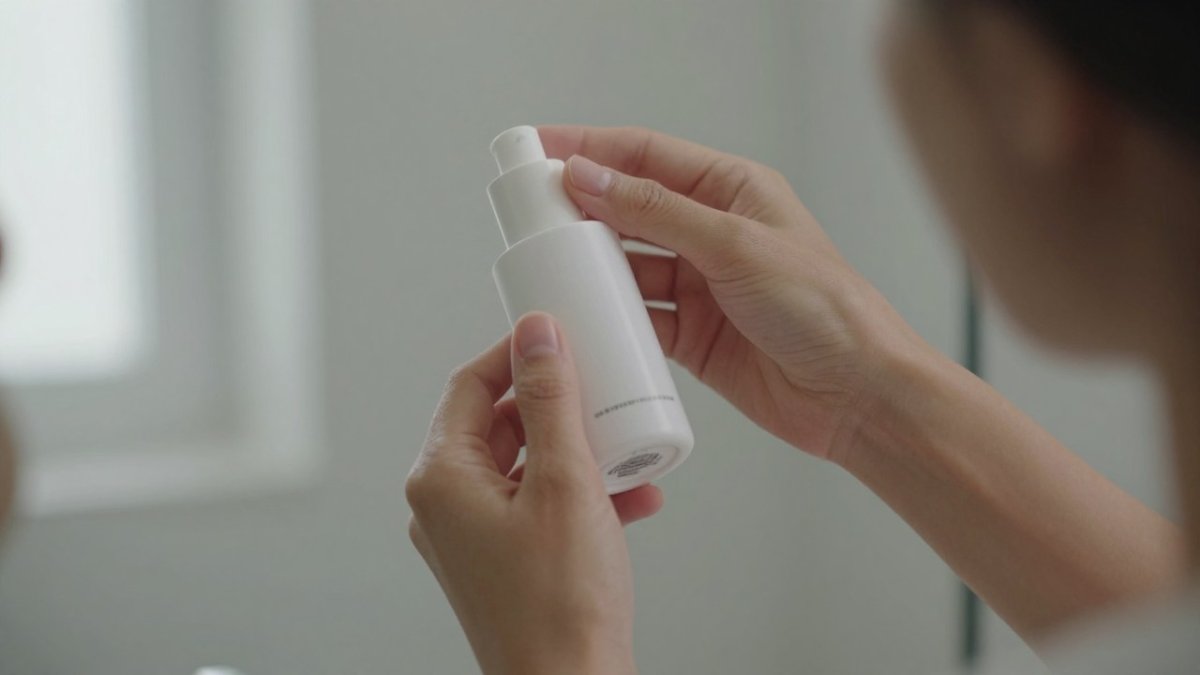
- Bottles: the bottom base or the shoulder near the label edge
- Jars: the bottom of the jar or the inside lid
- Tubes: the crimped end, where the tube is sealed
Hold the product under good light and turn it slowly. Codes are often printed in small type, so a phone flashlight helps. If the print is worn or rubbed off, the code may be unreadable, and you will need another method (covered below).
How to Use a Batch Code Checker Step by Step
Most online checkers work the same way. You select the brand, enter the code, and the tool returns an estimated manufacture date. Follow these steps.
Choosing the Right Brand in the Checker
Start by selecting the exact brand from the list. Many brands share parent companies, so choose the one printed on the packaging. If your brand is missing, the checker may not support it, and you should move to a manual method.
Entering the Code Correctly
Type the code exactly as printed. Pay attention to:
- Letters that look like numbers (O and 0, I and 1)
- Spaces or dashes, which some checkers require and others ignore
- Upper and lower case, which some systems treat differently
If the result says "unrecognized code," double-check your spelling before assuming the code is invalid.
How to Check Expiry Date From Batch Number
A manufacture date from a batch code is a starting point. To estimate how long a product should last:
- Find the manufacture date from the checker or code decoding.
- Look for the period-after-opening (PAO) symbol, an open jar icon with a number such as 12M or 24M.
- Add the PAO period to the date you first opened the product.
- If there is no PAO symbol, many products stay usable for about two to three years from manufacture when stored well. Treat this as a general guide, not a rule.
Storage matters a great deal. Heat, sunlight and humidity shorten shelf life, especially for products with natural oils or active ingredients (the FDA). Keep products cool and closed.
How to Check Beauty Product Batch Codes Free Without Paid Tools
You can often decode a batch code without paying for a service. Many brands publish their code formats on their websites or customer service pages.
A useful approach:
- Search for the brand name with "batch code format" to see how its codes are built
- Compare your code against the published pattern
- Use a free checker to confirm the date
Be cautious about tools that ask for payment or personal details just to read a code.
Here is a quick summary of the free checking approaches covered in this section.
| Approach | Where to look | Watch out for |
|---|---|---|
| Brand code format | Brand website or customer service page | Format differs by brand |
| Free online checker | Major brands only | Unrecognized codes may be a typo |
| Paid checker | Not needed for reading codes | Avoid sites asking for personal data |
When Online Checkers Fail: A Manual Method
A checker returning "not found" does not mean the code is fake or the product is old. It usually means the tool's database does not include that brand, that production run, or that code format. Work through the steps below in order, and stop as soon as you have a defensible date.
Step 1: Re-read the code under magnification
Before anything else, confirm you have the full string. Photograph the code with your phone, zoom in, and compare it against the printed characters on the same label.
Watch out: if the print is dot-matrix and partially rubbed off, do not guess the missing characters, a wrong character produces a wrong date, which is worse than no date.
Step 2: Identify the code format from the brand's own materials
Search the brand name plus "batch code" or "lot number" and look for a customer service or FAQ page that describes the format. Many brands publish a pattern such as a two-digit year followed by a three-digit day-of-year, or a letter for the month plus a digit for the year. Once you know the pattern, you can decode the string yourself:
- A code like 2345 in a year-plus-day format means day 345 of 2023, which lands in mid-December 2023.
- A code like L4A2 in a letter-month format often reads as month L (the 12th letter, December), year 4 (2024), and a plant or line code A2.
- A code with a leading letter such as B19 may mean the second month of 2019 in brands that use a letter for the month and two digits for the year.
These are illustrative patterns, not universal rules. The point is to match your string to the brand's published pattern rather than to a generic decoder.
Step 3: Contact the manufacturer with a specific request
Email or call customer service and give them four things: the full code exactly as printed, the product name and size, the retailer you bought from, and a photo of the code and the bottom of the package. Ask a direct question: "What is the manufacture date for this lot?" A specific request gets a specific answer; a vague "is this old?" usually gets a scripted reply. Keep the response in writing in case you need it for a return.
Step 4: Use packaging and labeling changes as a cross-check
Brands revise packaging, ingredient lists, and label fonts on a rolling basis. If you have a second unit of the same product, compare the two: a different label layout, a new recycling symbol, or a changed ingredient order usually indicates a different production era. This does not give you a date, but it tells you whether the product is likely from the same run as a unit you already trust.
Step 5: Decide what to do with an unverified product
If none of the above produces a date, treat the product as unverified. That does not automatically make it unsafe, but it removes the age estimate you were relying on.
A manual method is slower than a lookup tool, but it can help when a database is incomplete, and it may give you a written record from the manufacturer.
How to Check Authenticity of Beauty Products Beyond the Batch Code
A batch code is a production tracking number, not a security feature. It is printed on the outside of the package, it is visible to anyone who handles the product, and it is trivially copied. That is the core limitation: a code that decodes to a plausible manufacture date tells you the string matches a known format, not that the product in your hand came from the brand's factory.
Why a valid-looking code is not proof
Batch codes are designed for recalls and quality control, not authentication. They are not serialized per unit, they are not encrypted, and they are not verified against a central registry at the point of sale. A code that passes a lookup tool has cleared a format and database check, nothing more. Treat the code as one data point among several, not as a verdict.
Packaging and physical checks that a copied code cannot fake
Counterfeiters can copy a code far more easily than they can copy manufacturing quality. Look for these signals, which are harder to replicate convincingly:
- Print quality on the code itself. Genuine codes are usually crisp dot-matrix or laser-etched and align with the label. A code that looks inkjet-smudged, sits at an odd angle, or appears to have been added after the label was applied is a warning sign.
- Batch code consistency across the unit. The code on the carton, the bottle, and any inner seal should match. Mismatches suggest repackaging.
- Seals and closures. A shrink band that is glued rather than heat-shrunk, a pump that does not depress smoothly, or a cap that does not click are manufacturing tells.
Seller and channel checks
Where you bought the product matters more than any single code. Authorized retailers and the brand's own store carry accountability that marketplace third-party sellers often do not. If you bought from a marketplace, check whether the seller is listed as an authorized retailer on the brand's website. A price far below the brand's own listed price, especially on a newly launched or high-demand product, is a common counterfeit pattern.
What to do if you suspect a counterfeit
Stop using the product, especially on sensitive skin or around the eyes. Photograph the code, the packaging, and the seller listing. Contact the brand's customer service with the code and photos and ask them to confirm whether the lot is genuine; brands that track counterfeits will often tell you.
The practical takeaway: use the batch code to estimate age, use packaging and seller checks to judge authenticity, and do not let a passing lookup result substitute for either.
Next Step: Shop Verified Products With Radiant Essence Beauty
Once you know how to read batch codes, you can shop with more confidence. Browse the Radiant Essence Beauty collection, check the details on each product, and reach out to our team if you have questions about a product's age or storage. Shop now at Radiant Essence Beauty.
Frequently Asked Questions
How do I check the batch code on a beauty product?
Find the code printed on the box bottom, bottle base, tube crimp, compact back, or jar bottom. Note the letters and numbers exactly, including any punctuation. Then enter the code into a batch code checker, selecting the correct brand first. Many codes encode the manufacture date as a year and month, so the checker can return an approximate age. If the code is unclear, photograph it under good light and compare the characters carefully before entering it.
Are online cosmetic batch code checkers accurate?
Accuracy varies. Checkers rely on each brand's own code formats and databases, so results are only as good as the information behind them. Some brands use proprietary codes that public tools cannot decode, and some tools are out of date. Treat the output as an estimate of manufacture date rather than a guarantee. If a checker returns no result, that does not confirm the product is fake; it usually means the code format is not in the database.
Is there an app that can tell me if my beauty products are expired?
Some apps and websites can decode batch codes for certain brands and estimate product age. A more reliable check is the period-after-opening symbol, a small open jar icon with a number and an M for months, which shows how long a product should last once opened. Combine that symbol with the manufacture date from the batch code to judge whether a product is still within its useful life. Discard any product that smells, separates, or changes color.
What should I do if a batch code checker does not recognize my product?
First, confirm you selected the correct brand and entered every character, since letters like O and 0 are easy to confuse. If the checker still fails, look for a manufacture date printed in plain text or the period-after-opening symbol on the packaging. You can also contact the brand's customer service with a photo of the code and packaging. If the product was purchased from a retailer, ask them to verify it as well.