 blog
Peptides vs Hyaluronic Acid for Wrinkles: Which Works Better
Quick Summary
Peptides vs hyaluronic acid is not a single winner: hyaluronic acid draws water into the skin and softens dehydration lines within minutes, while peptides signal collagen support and help firmness over several weeks of daily use. Choose based on whether dryness or loss of firmness is your main concern.
- Hyaluronic acid attracts and holds water, with visible plumping within minutes to hours.
- Peptides aim for structural change and typically need several weeks of daily use to show results.
- Hyaluronic acid suits dehydration lines; peptides are associated with lines from reduced firmness.
- Apply hyaluronic acid to damp skin first, then peptide serum, then moisturizer to seal both in.
- Check ingredient lists for named peptides and hyaluronic acid rather than vague "complex" wording.
Table of Contents
- What Peptides and Hyaluronic Acid Actually Do for Skin
- Peptides vs Hyaluronic Acid: The Key Differences
- Which Wrinkles Respond Best to Each Ingredient
- Peptide Serum or Hyaluronic Acid First? How to Layer Them
- Hyaluronic Acid and Peptides Together: Compatibility and Routine Tips
- What to Look for in a Hyaluronic Acid Peptide Serum and Its Benefits
- Choosing Your Anti-Aging Serum at Radiant Essence Beauty
- Frequently Asked Questions
What Peptides and Hyaluronic Acid Actually Do for Skin
Peptides and hyaluronic acid are two of the most talked-about ingredients in anti-aging skincare, and a clear peptides vs hyaluronic acid comparison shows they do very different jobs. Hyaluronic acid is a humectant that pulls water into the skin's surface, which plumps fine lines within minutes. Peptides are short chains of amino acids that signal the skin to produce more collagen over weeks of consistent use. Knowing that difference is the first step to choosing the right serum for your wrinkles.
Hyaluronic acid is naturally present in the skin and is known for its water-binding capacity (Hyaluronic acid: A key molecule in skin aging). Topical formulas aim to add moisture to the outer layers, which is why hydrated skin often looks smoother right away. The effect is real but temporary, and it depends on keeping the skin moisturized.
Peptides work on a longer timeline. Certain signal peptides are designed to mimic fragments released during normal collagen breakdown, prompting skin cells to rebuild structure. Results typically take several weeks of daily use to show.
Peptides vs Hyaluronic Acid: The Key Differences
The clearest way to compare these ingredients is by mechanism, molecule size, and timeline. Hyaluronic acid delivers immediate surface hydration. Peptides aim for structural change, supporting firmness and elasticity over time. But treating each as a single ingredient hides the variation that actually determines whether a product works.
| Factor | Hyaluronic Acid | Peptides |
|---|---|---|
| Primary action | Attracts and holds water | Signals collagen support |
| Molecule size | Ranges from high-molecular-weight (surface film) to low-molecular-weight (deeper penetration) | Short amino acid chains; penetration varies by peptide type and formula |
| Speed of visible effect | Within minutes to hours | Several weeks of daily use |
| Best target | Dehydration lines | Loss of firmness |
| Irritation risk | Very low for most skin | Low, but varies by formula |
| Formulation sensitivity | Degrades in low-humidity environments without an occlusive layer | Concentration, pH, and packaging affect stability |
Hyaluronic acid is not one molecule. High-molecular-weight hyaluronic acid sits on the surface and forms a breathable film that limits water loss. Low-molecular-weight versions penetrate the outer layers and can plump from within, but they may also trigger mild irritation in sensitive skin. A formula that lists "sodium hyaluronate" may contain either or both, and the molecular weight is rarely disclosed on the label. That is why two hyaluronic acid serums at the same percentage can feel and perform differently.
Peptides are a broad category, not a single ingredient. Signal peptides (often ending in "-peptide" on labels, such as palmitoyl tripeptide-1 or palmitoyl tetrapeptide-7) are designed to mimic fragments released during collagen breakdown and prompt skin cells to rebuild structure. Carrier peptides, such as copper tripeptide-1, deliver trace minerals. Neurotransmitter-inhibiting peptides aim to soften expression lines by interfering with muscle signaling, though topical evidence is limited compared with injectable treatments. Enzyme-inhibitor peptides target collagen-degrading enzymes. Each function implies a different timeline and a different expectation.
Concentration and delivery matter more than the ingredient name. A peptide listed near the end of an ingredient list may be present at a fraction of a percent, which is often below the level studied for visible change. Encapsulation and airless packaging protect peptides from degrading before they reach the skin. Hyaluronic acid, meanwhile, can pull water from the skin in dry climates if it is not sealed with a moisturizer, which is why a humectant alone is not a complete routine.
Pros and cons at a glance:
- Hyaluronic acid pros: fast, gentle, suits nearly all skin types, and pairs well with almost every other active. Cons: effects fade without moisturizer, high-molecular-weight versions stay on the surface, and it does not rebuild collagen.
- Peptide pros: supports firmness and works with long-term routines, and different peptide types target different concerns. Cons: slow results, formulas vary widely in strength and stability, and label claims often outrun the evidence for a specific peptide.
Watch out: A product that lists both ingredients may include only trace amounts of each. Check where they appear in the ingredient list and whether the formula names specific peptides rather than a vague "peptide complex."
Which Wrinkles Respond Best to Each Ingredient
Not all wrinkles have the same cause, so one ingredient will not treat every line equally. Dehydration lines are shallow creases that look worse when the skin is dry. Expression lines form from repeated movement and deepen as skin loses firmness.
Dehydration lines and fine lines
Hyaluronic acid is the more practical choice for fine lines caused by dryness. Because it draws moisture to the surface, the lines often look softer within the same day.
Expression lines and loss of firmness
Peptides are generally associated with lines that come from reduced firmness over time, and their benefit typically builds gradually with consistent use.
Peptide Serum or Hyaluronic Acid First? How to Layer Them
Apply thinner, water-based products first and richer ones last. Hyaluronic acid is a water-based humectant, so it usually goes on before a peptide serum. Seal both with a moisturizer to keep them from evaporating. Many people apply hyaluronic acid to damp skin, since it binds more water that way.
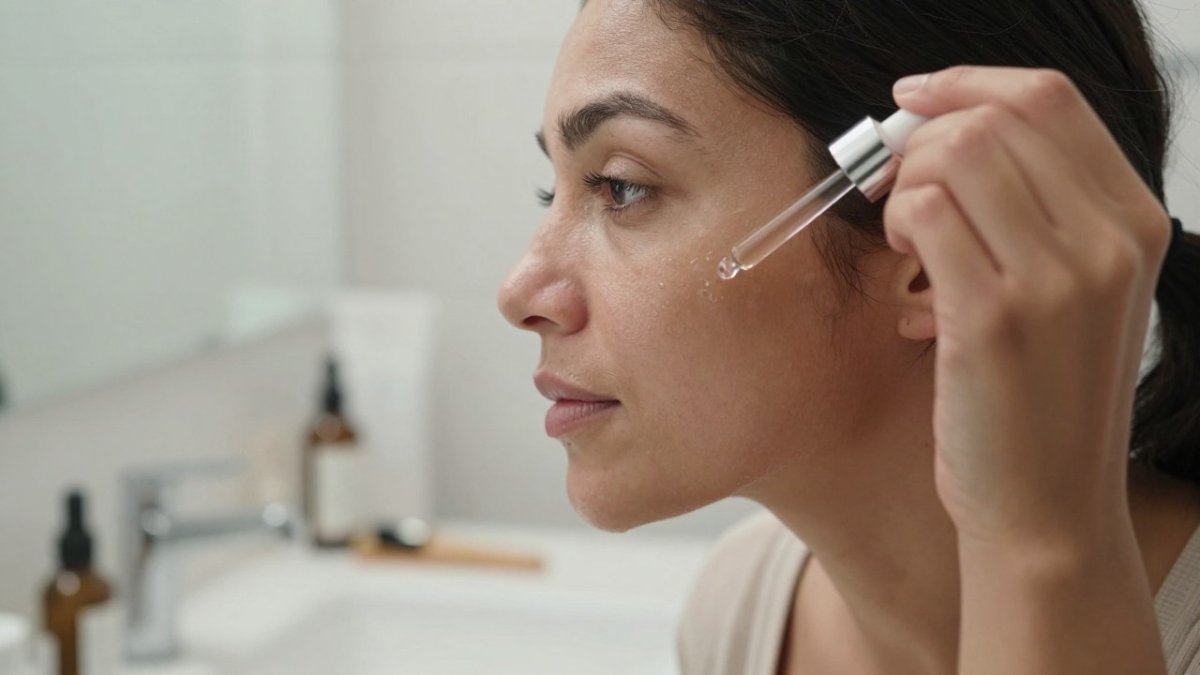
A practical order for a morning routine looks like this: cleanser, hyaluronic acid on damp skin, peptide serum, moisturizer, sunscreen. In the evening, the same sequence works, with the option to substitute a retinoid after the peptide serum and before the moisturizer. If you use both a peptide serum and a retinoid, apply the peptide first, wait a minute or two, then apply the retinoid. This order lets the peptide absorb before the retinoid changes the skin's surface environment.
Compatibility with common actives:
- Retinoids: Generally compatible with peptides, and some formulas combine them. Introduce the retinoid slowly, two to three nights per week, and buffer with moisturizer if irritation appears. Hyaluronic acid can be layered before or after a retinoid to reduce dryness.
- Vitamin C: Use vitamin C in the morning and peptides in the evening, or apply vitamin C first and peptides after it has absorbed. Both are acidic-friendly, but layering them back-to-back can sting sensitive skin.
- Exfoliating acids (AHA/BHA): Apply acids first on the nights you use them, then peptides after the acid has absorbed. Do not layer acids and retinoids in the same routine; alternate nights instead. Hyaluronic acid is a good follow-up to acids because it replenishes moisture.
- Niacinamide: Compatible with both ingredients and often formulated alongside them. No special ordering is needed.
Watch out: Layering too many actives at once can irritate sensitive skin. Introduce one new product at a time and wait a week before adding another. If you use a low-pH acid and a peptide serum in the same routine, apply the acid first and allow it to absorb fully, since very low pH can degrade some peptides.
Application details that affect results:
- Apply hyaluronic acid to damp skin, not dry skin, so it has water to bind.
- Use a pea-sized amount of peptide serum for the full face and neck; more does not improve absorption.
- Wait 30 to 60 seconds between layers so each product can set.
- In dry climates or heated rooms, follow hyaluronic acid with a moisturizer containing occlusives such as dimethicone or squalane to prevent it from pulling water from deeper layers.
- Store peptide serums away from direct sunlight and heat, since peptides are sensitive to degradation.
When to simplify: If your skin stings, turns red, or flakes after layering, drop back to cleanser, one active, moisturizer, and sunscreen until the reaction settles. A dermatologist can help you identify which product is responsible if the pattern is unclear.
Hyaluronic Acid and Peptides Together: Compatibility and Routine Tips
These two ingredients are generally compatible and often appear in the same serum. Using them together addresses both hydration and firmness, which is why many routines combine them. Keep the routine simple: cleanser, hyaluronic acid, peptide serum, moisturizer, and sunscreen during the day. Consistency matters more than adding extra steps.
What to Look for in a Hyaluronic Acid Peptide Serum and Its Benefits
When shopping for a combination serum, check the ingredient list for named peptides and hyaluronic acid rather than vague "complex" wording. Look for fragrance-free formulas if your skin reacts easily, and read the full product description before buying. Radiant Essence Beauty offers skincare products, and you can review current product details on our site.
Choosing Your Anti-Aging Serum at Radiant Essence Beauty
When choosing an anti-aging serum, start with your main concern. If dryness and surface lines bother you most, prioritize hydration. If firmness is the goal, look for peptide-focused formulas and give them several weeks. For current product details and pricing, visit the Radiant Essence Beauty website.
Frequently Asked Questions
Do peptides or hyaluronic acid work better for wrinkles? Neither works better in every case. Hyaluronic acid softens dehydration lines quickly, while peptides support firmness and collagen over several weeks of daily use.
Can I use hyaluronic acid and peptides every day? Yes, for most skin types. Start slowly if your skin is sensitive, and consult a dermatologist if irritation persists.
Which should I apply first? Apply hyaluronic acid to damp skin first, then the peptide serum, then a moisturizer to seal in both.
Frequently Asked Questions
What is better for aging skin, peptides or hyaluronic acid?
Neither replaces the other. Hyaluronic acid is a humectant that draws water into the skin, which temporarily plumps fine lines caused by dehydration. Peptides are short chains of amino acids that some formulas use as signal peptides to support collagen and firmness over several weeks of consistent use. Many people with aging skin use both: hyaluronic acid for immediate hydration and peptides for longer-term support. Results vary with skin type, product concentration, and how consistently the product is used.
Can you use peptides and hyaluronic acid together?
Yes. Peptides and hyaluronic acid are generally compatible and are often combined in a single serum or layered in one routine. Apply the thinner, water-based product first, usually hyaluronic acid, then follow with peptides, and finish with a moisturizer to lock in hydration. Patch test if you have sensitive skin, since any new active can cause irritation.
Which goes first, peptides or hyaluronic acid?
Apply the thinnest, most water-based product first. Hyaluronic acid is typically applied to damp skin so it can draw in moisture, then peptide serum follows, and a moisturizer seals the layers. If your peptide product is a thicker cream, apply it after the serum but before heavier creams. Check the product label, since formulas differ in texture and recommended order.
How long does it take to see results from peptide or hyaluronic acid serum?
Hyaluronic acid can make fine lines look smoother within minutes to hours because it hydrates the skin surface. Peptide serums typically require consistent daily use for several weeks before changes in firmness or the appearance of wrinkles are noticeable. Clinical results depend on the specific formula, concentration, and individual skin. Expect gradual, modest changes rather than dramatic reversal of established wrinkles.