 How-to
Why Are Online Beauty Prices Lower? A 2026 Guide
Table of Contents
- Why Online Beauty Prices Are Lower Than Mall Stores
- The Cost Structure Behind Online Beauty Prices
- How to Avoid Fake Beauty Products When Prices Look Too Good
- How to Check If Skincare Products Are Authentic Before You Buy
- A Beauty Product Price Comparison Checklist for Online Shoppers
- When Online Beauty Prices Are Not Actually Cheaper
- What to Know Before Your Next Beauty Purchase
- Frequently Asked Questions
Last Updated: October 18, 2026
Why Online Beauty Prices Are Lower Than Mall Stores
Online beauty prices are often lower because online stores carry less overhead, buy in larger volumes, and sell direct. That means fewer middlemen between the brand and your order.
At Radiant Essence Beauty, we hear the same question every week: are lower prices a warning sign? Usually, no. Most of the gap comes from how the store is built, not from what's in the bottle.
Here's the short version. A mall store pays rent, staff, lighting, and display fixtures before it sells a single lipstick. An online store pays for a warehouse, a website, and shipping. That difference shows up at checkout.
Below, we'll show you exactly how to compare prices like a pro, spot real deals, and avoid fakes. We'll also cover the moments when online prices are not actually cheaper.
The Cost Structure Behind Online Beauty Prices
Online beauty prices are often lower because the cost of getting a product from a brand to your door is structured differently online than in a mall. The gap is rarely one big discount. It is a stack of smaller cost differences that compound.
Here is where the money goes in each model.
Physical retail carries fixed, location-heavy costs. A mall or department-store beauty counter pays rent per square foot in a high-traffic center, plus staff, lighting, display fixtures, security, utilities, and shrinkage (theft and damage). Those costs are fixed: they are owed whether the counter sells ten units or a thousand. Each unit sold has to absorb a share of that fixed cost, so the sticker price carries the rent.
Online retail trades rent for fulfillment. An online seller pays for warehouse space (typically industrial, priced far below mall retail space), a website and payment processing, and shipping. One warehouse and one support team can serve customers across the whole country, so the fixed cost is spread across far more orders. The U.S. Small Business Administration's retail guidance notes that location costs are a major driver of small retail expenses, which is one structural reason online sellers can price lower.
The sales model changes the markup stack. There are three common online models, and each produces a different price floor:
- Direct-to-consumer (DTC): the brand sells through its own site, so there is no retailer markup between the brand and you. The brand keeps the retail margin instead of splitting it.
- Authorized online retailer: buys from the brand or an authorized distributor and sells at a discount to mall prices, often on thinner margins because its overhead is lower.
- Marketplace seller: competes on price against many other sellers of the same item, which pushes prices toward the lowest sustainable level.
Inventory and clearance drive real discounts. Beauty has short product cycles and expiration dates. Brands and retailers clear seasonal shades, discontinued lines, and near-date stock online because an online listing can reach buyers nationwide who still want that item. A mall counter has to clear the same stock through a single location, so it often discounts less or not at all.
Volume buying lowers unit cost. Large online sellers buy in bigger quantities and negotiate lower per-unit costs, then pass part of that through. That is a genuine cost advantage, not a marketing trick.
A common mistake is assuming a lower price means lower quality. In practice, it usually means a leaner cost structure, fewer fixed costs per unit, fewer hands on the product, and inventory that is being cleared rather than held at full price.
How to Avoid Fake Beauty Products When Prices Look Too Good
The fastest way to avoid fake beauty products is to check the seller, not just the price. A discount that undercuts everyone by a wide margin deserves a second look.
Counterfeit and gray-market items do exist online (the FDA). They often show up as prices that seem impossible, vague product photos, or sellers with no contact details.
Watch for these red flags:
- A price far below every other seller
- Stock photos instead of real product images
- No ingredient list or batch code shown
- A seller with no return policy or support contact
- Pressure tactics like countdown timers on every item
The U.S. Food and Drug Administration's guidance on cosmetics explains how cosmetics are regulated and what information should appear on a label. Knowing the basics helps you judge a listing.
Legitimate discounts come from clearance, seasonal promotions, or bulk buying. They don't come from mystery sourcing.
How to Check If Skincare Products Are Authentic Before You Buy
Checking authenticity starts with the label. Real products list ingredients, a batch or lot code, and a clear manufacturer name.
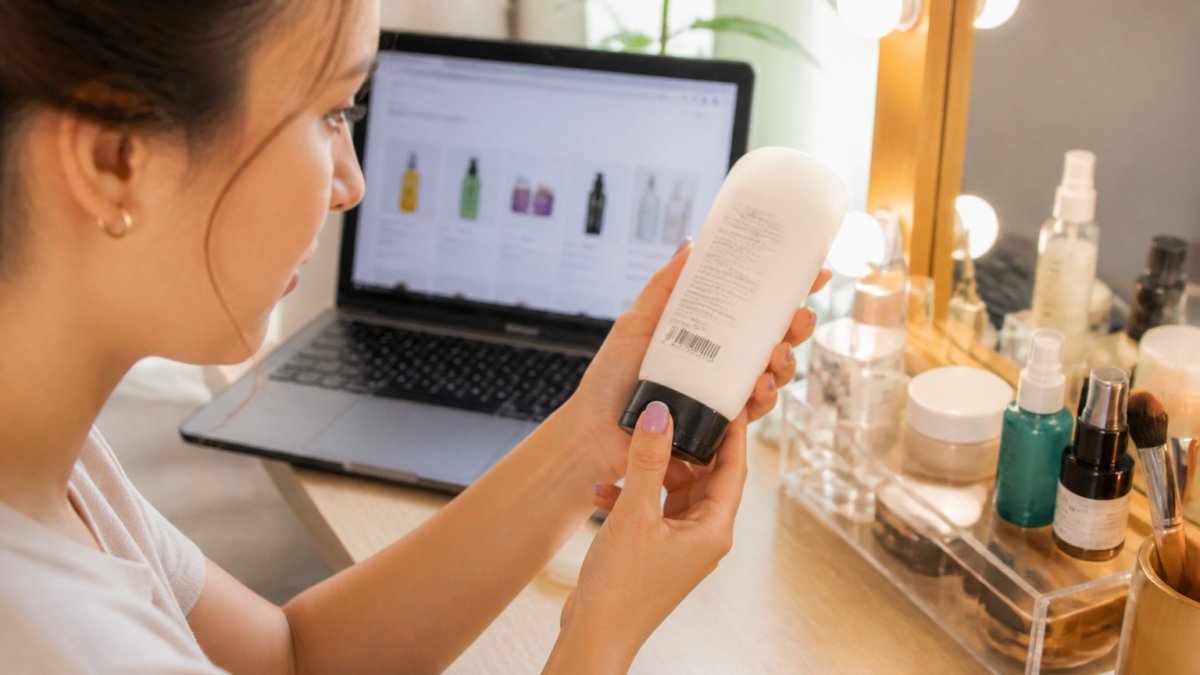
Run through this list before you pay:
- Confirm the seller is an authorized retailer
- Check that the listing shows a full ingredient list
- Look for a visible batch or lot code
- Read the return and refund policy
- Scan recent reviews for authenticity complaints
- Verify the product's packaging matches the brand's official images
- Contact customer service with a question and judge the response
A seller who answers ingredient and sourcing questions clearly is usually a safe bet. One who dodges them is not.
A Beauty Product Price Comparison Checklist for Online Shoppers
A fair beauty product price comparison looks at total cost, not the sticker. Shipping, taxes, and return terms change the real number, and the only way to know which option is cheaper is to compute the landed cost per unit.
Use this method, in order.
Step 1: Normalize the size. Divide the price by the number of ounces or milliliters. A $28 bottle of 1.7 oz is about $16.47 per ounce; a $22 bottle of 1 oz is $22 per ounce. The larger bottle at the higher sticker price is the better value. Always compare price per unit, not price per bottle.
Step 2: Add shipping and any minimum-order threshold. A $6 shipping fee on a $20 item is a 30% surcharge. If free shipping requires a $35 minimum, the 'cheaper' seller may only be cheaper if you were going to spend $35 anyway. Add shipping to the item price before comparing.
Step 3: Account for sales tax. Online sellers collect sales tax based on your delivery address in most states, and rates vary by jurisdiction. A seller with a lower sticker price but a higher tax jurisdiction can lose the comparison. Estimate the tax on the total, not just the item.
Step 4: Price the return risk. A no-return deal is not a discount; it is a bet. If there is a restocking fee or you pay return shipping, subtract that expected cost from the apparent savings. A slightly higher price with a free, generous return window is often the lower total cost.
Step 5: Check the seller and the bundle. Confirm the seller is authorized, and if you are buying a set, divide the set price by the number of items to get the per-item cost. Sets can beat single items, but only if you will use every piece.
| What to Compare | Why It Matters | What to Check |
|---|---|---|
| Product size | A lower price may mean less product | Price per ounce or milliliter |
| Shipping cost | Free shipping changes the total | Threshold for free delivery |
| Sales tax | Jurisdiction changes the total | Estimated tax on the full order |
| Return policy | A no-return deal is a risk | Window, fees, and condition rules |
| Seller status | Authorized sellers are safer | Sourcing and contact info |
| Reviews | Real feedback shows reliability | Recent, specific reviews |
| Bundle value | Sets can beat single items | Price per item in the set |
A worked example. Suppose a mall store sells a 1.7 oz moisturizer for $32 plus 8% sales tax, for a total of $34.56, and you can return it in person for free. An online seller lists the same 1.7 oz product for $26, charges $5 shipping, and collects 6% tax. The online total is $26 + $5 + $1.56 = $32.56, about $2 cheaper, but only if you do not need to return it. If you return it and pay $5 return shipping, the online option costs more than the store. That is the calculation the sticker price hides.
Also check the seller's customer service before you commit. Fast, clear answers on a pre-sale question tell you a lot about how they will handle a problem later.
When Online Beauty Prices Are Not Actually Cheaper
Sometimes the online price only looks lower. Add shipping, and a small order can cost more than a store trip.
Here's where the math flips:
- Small orders below the free-shipping threshold
- Products with heavy or bulky packaging
- Items you need today, where rush shipping adds cost
- Returns that carry a restocking or shipping fee
- Sales tax differences between sellers
Convenience has value too. If you need a product tonight, a store down the street wins even at a higher sticker price.
The real difference between a good deal and a bad one comes down to total cost and trust. A slightly higher price from a verified seller often beats a deep discount from an unknown one.
What to Know Before Your Next Beauty Purchase
Before you buy, confirm three things: the seller is authorized, the total cost beats the alternative, and the return policy protects you.
Online beauty prices are lower for real, structural reasons. Leaner overhead and direct sourcing do most of the work. That's the model we built Radiant Essence Beauty around: a fast, user-friendly store with customer service that answers before and after the sale.
We focus on three things: high-quality products, competitive pricing, and a shopping experience that respects your time. No mystery sourcing, no dodged questions.
Frequently Asked Questions
Why are beauty products cheaper online than at the mall?
Online retailers often have lower overhead costs than mall stores because they do not pay for prime retail space, multiple sales staff, or in-store fixtures. Many also buy directly from brands or authorized distributors, cutting out middlemen. Online-only promotions and smaller inventory risks can further reduce prices. However, a lower price alone does not guarantee authenticity, so always verify the seller and check for batch codes and expiration dates before buying.
How can I tell if an online beauty product is genuine?
Check the seller's authorization status, look for a visible batch code and expiration date, and compare packaging details like fonts and seals with the brand's official images. Avoid listings with misspelled brand names or prices far below market average. You can also contact the brand's customer service to confirm authorized retailers.
Are discounted beauty products online authentic?
Not always. Legitimate discounts come from authorized retailers clearing seasonal stock, bulk purchasing, or running brand-approved promotions. Counterfeit or gray-market products often appear at prices that seem too good to be true. To protect yourself, buy from retailers with clear return policies, check customer reviews for authenticity complaints, and verify batch codes with the brand. If a deal looks suspicious, skip it and pay a little more for a verified product.
Do shipping costs make online beauty products more expensive?
Shipping can erase the savings on a single low-priced item, so compare the total delivered cost, not just the product price. Many online beauty retailers offer free shipping above a minimum order or flat-rate shipping that becomes economical when you buy multiple items. Factor in taxes and return shipping fees too. A beauty product price comparison should always include shipping, taxes, and any membership fees before you decide which option is cheaper.
Lower prices shouldn't mean lower confidence. Radiant Essence Beauty offers a fast, user-friendly shopping experience, affordable pricing on high-quality products, and a customer service team that answers your questions. Shop now and get quality beauty products with the convenience you deserve.