 Comparison
Is a Custom Skincare Routine Worth It?
Last Updated: October 31, 2026
Quick Summary
A custom skincare routine is worth it when your skin has concerns a basic routine hasn't resolved, you've already wasted money on trial and error, and you'll stick with the products. For stable skin that tolerates mainstream products, a regular cleanser, moisturizer and sunscreen usually covers the essentials.
- Personalization is a matching tool that helps avoid triggers and conflicting actives, not a treatment.
- Compare total monthly cost for a complete routine, not the price of one bottle.
- Claims like DNA-based formulas and guaranteed timelines are marketing, not proven evidence.
- Most over-the-counter actives need 8 to 12 weeks of consistent use before results can be judged.
- Check cancellation terms, shipping fees and minimum commitments before subscribing.
Table of Contents
- What a Custom Skincare Routine Actually Means
- Custom vs. Regular Skincare Routine: How They Differ
- Benefits of a Personalized Skincare Plan (and Where They Stop)
- What Custom Skincare Products Cost and What You Get for It
- When a Custom Routine Is Not Worth the Money
- How to Build a Skincare Routine You Can Test Yourself
- Deciding Whether a Custom Routine Fits Your Skin and Budget
- Frequently Asked Questions
Is a custom skincare routine worth it? For many shoppers, the honest answer is "sometimes." Radiant Essence Beauty has put together this guide to help you decide, based on what personalization actually changes, what it costs, and when a regular routine does the job just as well.
What a Custom Skincare Routine Actually Means
A custom skincare routine is a set of products and steps chosen around your specific skin type, concerns, and daily habits.
The core idea is simple. Oily, dry, acne-prone, and sensitive skin each respond differently to the same ingredients, so a routine that suits one person may irritate another. Personalization tries to match the routine to the individual rather than the average shopper.
Custom vs. Regular Skincare Routine: How They Differ
A regular routine is built from general-purpose products sold for a skin type or concern on the label. A custom routine is built from a profile of your skin and habits.
Regular routines rely on your own trial and error. Custom routines aim to reduce that guesswork up front. Whether that is worth paying for depends on how much trial and error you have already been through.
Benefits of a Personalized Skincare Plan (and Where They Stop)
The honest framing is that personalization is a matching tool, not a treatment. It can improve the odds that the products you use suit your skin and that you stick with them. It cannot change what an ingredient is capable of doing. Separating those two ideas is the fastest way to judge whether a custom plan is worth paying for.
What is reasonably well supported
- Better tolerability through screening. If an assessment flags ingredients you have reacted to before, fragrance, essential oils, certain acids, high-strength retinoids, a plan that avoids them reduces the chance of a repeat reaction.
- Fewer conflicting actives. A good plan spaces out exfoliating acids and retinoids rather than stacking them on the same night, which lowers the risk of irritation and barrier damage. This is basic formulation hygiene, but many shoppers get it wrong on their own.
- Better adherence. A routine built around your actual habits, how much time you have, whether you wear makeup, how often you travel, is more likely to be followed consistently. Consistency, not novelty, is what drives most visible skin improvement.
What is marketing, not evidence
- "Formulated for your DNA" or "your unique skin profile." Genetic and microbiome testing for cosmetic skincare is an emerging area. It is not yet a reliable basis for choosing a cleanser or moisturizer, and no at-home test can tell you which serum will clear your skin.
- "Prescription-strength" or "dermatologist-grade" claims on non-prescription products. These are marketing terms, not regulated categories.
- Guaranteed timelines. Claims like "clear skin in 14 days" ignore that retinoids, acids, and most actives need weeks to months, and that purging and irritation are common early on.
Realistic timelines and how to measure results
Most over-the-counter actives need consistent use before you can judge them:
Measure results by picking two or three specific concerns, taking a photo in the same lighting at the start and every four weeks, and noting what changed. If nothing measurable has changed after 8-12 weeks of consistent use, the routine may not be working for you.
Where the benefits stop
-
Irritation is still possible. A custom formula can still contain an ingredient your skin dislikes, and "personalized" does not mean "hypoallergenic." Patch-test new products and introduce one at a time.
-
Skin changes. Seasons, hormones, pregnancy, and medications shift what your skin needs. A plan built once and never revisited can become a mismatch.
-
It does not replace sunscreen or professional care. No personalized kit substitutes for daily broad-spectrum sunscreen, and persistent, painful, or spreading conditions warrant a dermatologist rather than another subscription cycle.
American Academy of Dermatology guidance on building a skincare routine
The article separates what personalization reasonably delivers from what is marketing, and the contrast is easy to scan.
| Claim | Status | Why |
|---|---|---|
| Better tolerability through screening | Reasonably supported | Avoids known triggers like fragrance or certain acids |
| Fewer conflicting actives | Reasonably supported | Spacing acids and retinoids lowers irritation risk |
| Better adherence | Reasonably supported | Routines built around habits get followed consistently |
| "Formulated for your DNA" | Marketing, not evidence | Cosmetic genetic testing is not yet a reliable basis |
| "Prescription-strength" on non-prescription products | Marketing, not evidence | Not a regulated category |
| Guaranteed timelines | Marketing, not evidence | Most actives need weeks to months |
| AI or algorithmic diagnosis | Marketing, not evidence | Cannot reliably distinguish conditions like acne from rosacea |
What Custom Skincare Products Cost and What You Get for It
Cost is where the "worth it" question usually gets decided, and it is the part most personalized-skincare marketing glosses over. Custom plans are rarely one-time purchases. Most are subscriptions billed every 30, 60, or 90 days, and the per-month figure is the number that matters, not the price of a single hero product.
A realistic way to frame the comparison is total monthly spend for a complete routine:
- Off-the-shelf baseline. A gentle cleanser, a moisturizer suited to your skin type, and a broad-spectrum sunscreen can be assembled for roughly
- Custom subscription. Pricing depends on quantity, delivery schedule, and which products you choose. Check Radiant Essence Beauty's website for current prices. The premium is not just the formula, you are also paying for the quiz or consultation, the packaging, and the recurring convenience.
- One-time custom purchase. Some providers sell a single formulated product (often a serum or moisturizer) without a subscription.
What the premium actually buys
When you pay for customization, you are paying for four things, and it helps to judge each separately:
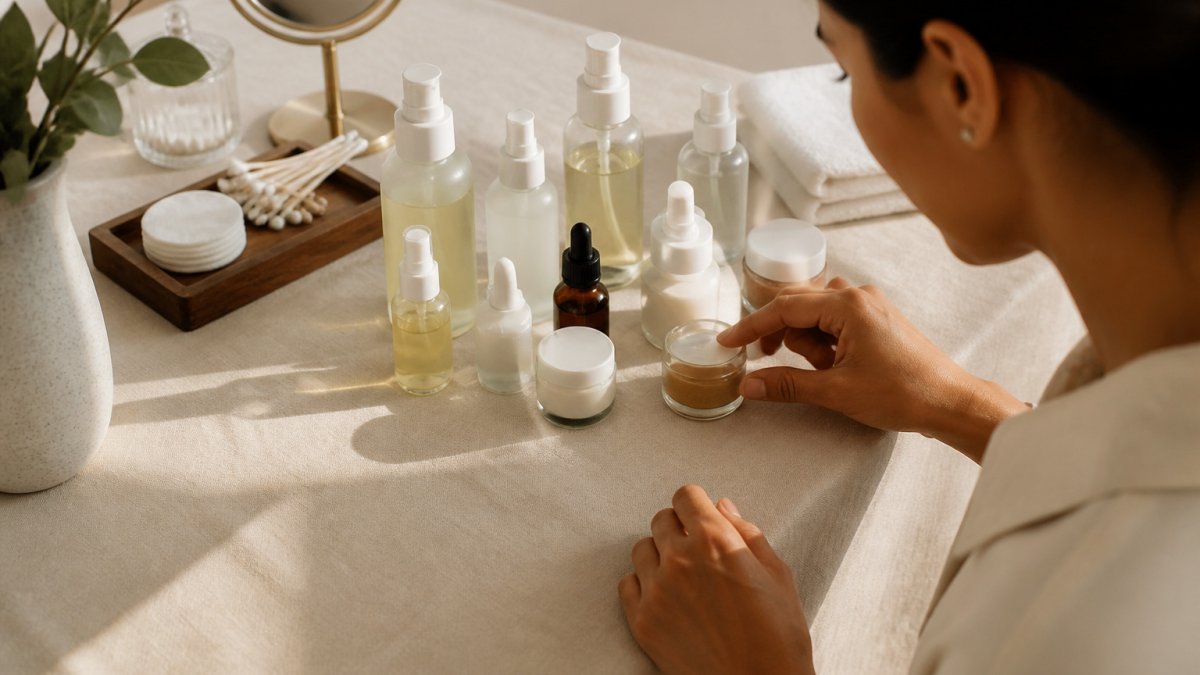
- An assessment. A quiz, photo upload, or consultation. The value depends entirely on how thorough it is, a five-question quiz is worth far less than an intake that covers skin type, current actives, sensitivities, medications, and climate.
- Formulation or curation. Either a product mixed for you or a curated set of existing products. Curated sets are cheaper to produce and often marked up anyway; ask which one you are getting.
- Convenience and refills. Automatic replenishment saves time but locks you into a cadence. Check whether you can pause, skip, or swap products without a fee.
- Ongoing adjustment. The strongest justification for a subscription is a provider that actually revisits your plan as your skin changes. If nothing changes between shipments except the billing date, you are paying a premium for a static routine.
Hidden costs to check before you commit
- Shipping and handling on recurring shipments, which can add to each delivery.
- Cancellation terms. Some subscriptions require notice before the next billing cycle or charge a fee to cancel mid-term.
- Minimum commitment. A "try it for one cycle" plan is only useful if one cycle is actually allowed.
The break-even question
Customization tends to break even or come out ahead when you have already spent real money on trial and error, several failed serums, a drawer of abandoned moisturizers, a treatment that irritated your skin. If you can point to a meaningful amount of wasted purchases in the past year, a guided plan that screens for known triggers may be worth considering.
Federal Trade Commission guidance on negative option and subscription billing
When a Custom Routine Is Not Worth the Money
A custom routine is probably not worth it if your skin is generally stable, you tolerate most mainstream products, and you are happy with a basic cleanser, moisturizer, and sunscreen.
It also makes little sense if you are on a tight budget and have not yet tried the basics. Start with a gentle cleanser, a moisturizer suited to your skin type, and daily sunscreen for several weeks.
How to Build a Skincare Routine You Can Test Yourself
You do not need a paid assessment to test whether personalization helps. Build a simple routine and track it for four to six weeks.
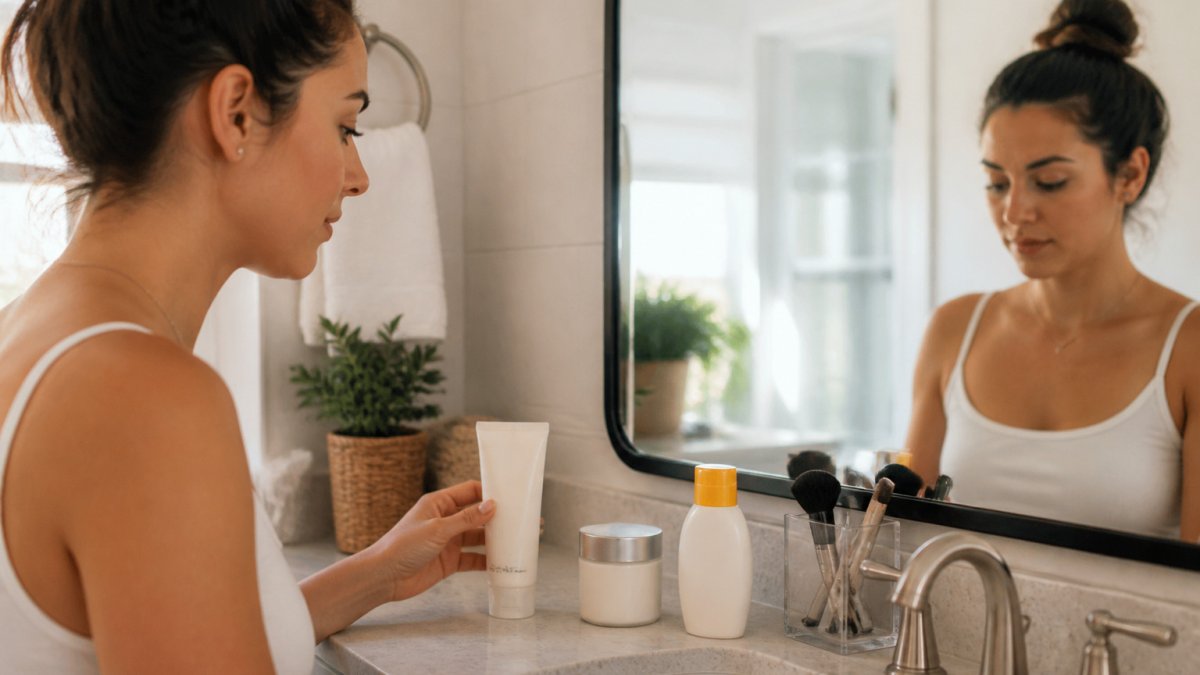
Morning: a gentle cleanser, a lightweight moisturizer, and broad-spectrum sunscreen. Evening: the same cleanser, plus one active ingredient or treatment if your skin tolerates it.
If the basic routine works, you have your answer about whether you need more.
Here is how layering generally works from thinnest to thickest: cleanser, toner or essence, serum, moisturizer, then sunscreen in the morning. For more on the correct order to layer products, see the detailed breakdown.
Deciding Whether a Custom Routine Fits Your Skin and Budget
Ask yourself three questions. First, does my skin have ongoing concerns that a basic routine has not resolved after consistent use? Second, am I willing to pay a recurring cost and share personal information for an assessment? Third, will I actually use the products, or will they pile up on the shelf?
If you answered yes to the first question and are comfortable with the cost and privacy trade-off, a custom routine may be worth trying, ideally for one cycle before committing long term. If not, a well-chosen regular routine is likely enough.
Shop our range of skincare, makeup, and fragrance at Radiant Essence Beauty, where you can build a routine at your own pace. [Shop Now]
Frequently Asked Questions
Is a custom skincare routine worth the money?
It depends on whether your skin needs are complicated or your current routine is already working. A custom plan is usually most useful when you have persistent concerns such as acne, rosacea, or sensitivity that over-the-counter products have not resolved, or when you have already spent money on products that irritated you. For people with simple, stable skin, a well-chosen basic routine of a gentle cleanser, moisturizer, and daily sunscreen often delivers most of the benefit at a lower cost. Compare the recurring price against what you already spend, and set a trial period to judge whether results justify it.
What are the benefits of a personalized skincare routine?
The main benefit of a personalized skincare plan is that it accounts for your skin type, concerns, and lifestyle together rather than assuming one routine fits everyone. This can reduce trial-and-error purchases, lower the risk of irritation from products that clash with your skin, and help you focus on a small number of effective steps. Personalization does not guarantee better results on its own, though. The formulas still need time, typically several weeks, and consistent use to show whether they work for you.
Are custom skincare products better than over-the-counter products?
Not automatically. Custom products are tailored to an assessment of your skin, but many effective over-the-counter cleansers, moisturizers, and sunscreens are formulated for common needs and are widely available at lower prices. Custom products tend to be more useful when you need a specific active ingredient combination, such as a prescription-strength treatment, or when standard options have failed. Check the ingredient lists yourself and compare them with products you already know are well tolerated.
How long does it take to see results from a new skincare routine?
Most skincare routines need at least 4 to 8 weeks of consistent use before you can judge their effect, and some actives such as retinoids can take three months or longer to show visible change. Mild initial irritation can happen with active ingredients, so distinguish between normal adjustment and a reaction that needs you to stop. If you see no improvement or notice worsening redness, swelling, or persistent irritation, pause the products and consult a board-certified dermatologist.