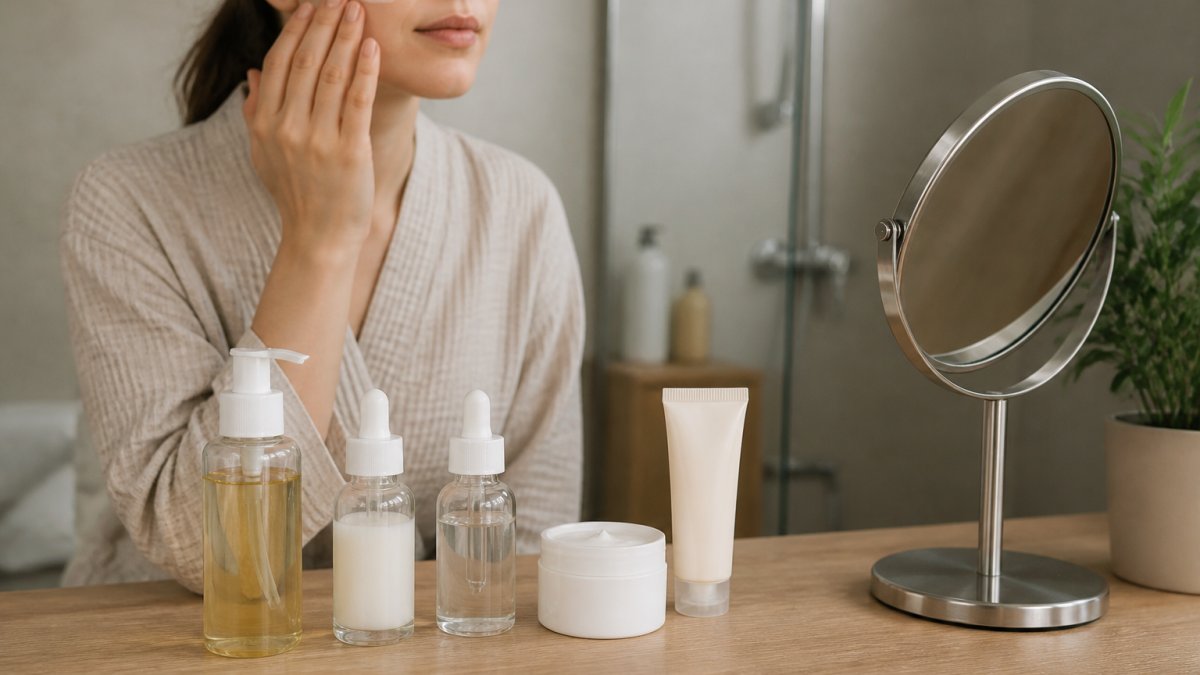
 How-to
How Do You Layer Skincare Products Effectively?
Last Updated: October 26, 2026
Quick Summary
To layer skincare effectively, apply the thinnest product first and the thickest product last, since texture decides the order. Most layers need only 30 to 60 seconds before the next one goes on, and sunscreen always goes last in the morning.
- Water-based products penetrate easily, while oil-based products and creams stay near the surface.
- The standard sequence runs cleanser, toner, essence, serum, eye cream, moisturizer, facial oil, then sunscreen in the morning.
- Wait until a product feels absorbed, not wet, before applying the next layer.
- Use retinol and strong acids on alternate evenings rather than the same night.
- Strip back to cleanser, moisturizer, and sunscreen for two weeks if skin stays reactive.
Table of Contents
- The Thinnest-to-Thickest Rule for Layering Skincare
- Morning Skincare Routine Order, Step by Step
- Night Skincare Routine Order for Repair and Renewal
- How Long to Wait Between Skincare Products
- Skincare Ingredients That Should Not Be Mixed
- Troubleshooting Pilling, Irritation, and Breakouts When You Layer
- Personalizing Your Layering Routine by Skin Type and Tolerance
- Building Your Layering Routine with Radiant Essence Beauty
- Frequently Asked Questions
The Thinnest-to-Thickest Rule for Layering Skincare
Learning how to layer skincare products effectively starts with one simple rule: apply the thinnest product first and the thickest product last.
Texture decides the order. A lightweight toner absorbs in seconds. A rich moisturizer seals everything beneath it. Get the sequence right, and each layer builds on the last.
Why Texture Decides Application Order
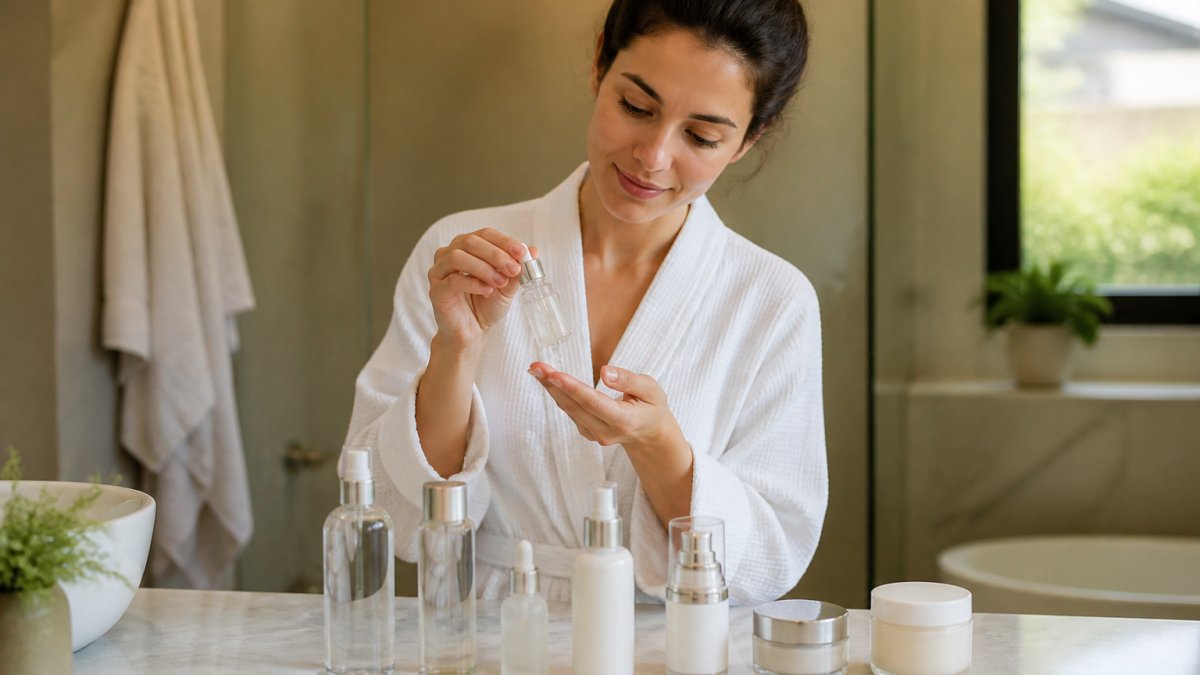
Product consistency controls how deep a formula can travel. Water-based products penetrate easily. Oil-based products and creams stay near the surface. Layer a heavy product first, and lighter ones never reach the skin.
The Full Product Layering Sequence
Here is the standard order most routines follow:
- Cleanser
- Toner
- Essence
- Serum or treatment
- Eye cream
- Moisturizer
- Facial oil
- Sunscreen in the morning
Treat this as a framework, not a law. Skip steps that do not serve your skin.
Morning Skincare Routine Order, Step by Step
A morning skincare routine order is built around protection. The goal is hydration plus sun defense, and it should take minutes, not an hour.
Follow these steps:
- Cleanse. Use a gentle cleanser or rinse with water if skin feels dry.
- Apply toner or essence. Pat in a lightweight, water-based product.
- Add a serum. Vitamin C is a common morning choice for brightness.
- Use eye cream. Tap a small amount around the eye area.
- Moisturize. Choose a texture that suits your skin type.
- Finish with sunscreen. This is the non-negotiable step.
Sunscreen always goes last in the morning. The American Academy of Dermatology recommends broad-spectrum protection with SPF 30 or higher American Academy of Dermatology sunscreen guidance. Apply it as the final layer, and let it set before makeup.
Night Skincare Routine Order for Repair and Renewal
The night skincare routine order shifts toward repair. Skin recovers while you sleep, so evening is the time for treatment products.
A common evening sequence:
- Cleanser to remove sunscreen, makeup, and grime
- Toner or essence for hydration
- Treatment serum or exfoliant
- Eye cream
- Moisturizer to support the skin barrier
- Facial oil on dry patches, if needed
There is no sunscreen at night. If you use a prescription product, apply it as directed by your clinician, often before moisturizer.
How Long to Wait Between Skincare Products
Most layers need only 30 to 60 seconds before the next one goes on. Wait until a product feels absorbed, not wet. If your skin still feels tacky, give it another moment.
Here is a practical guide:
| Product Type | Typical Wait | Sign It Has Absorbed |
|---|---|---|
| Toner or essence | 30 seconds | Skin feels damp but not wet |
| Water-based serum | 1 minute | No visible shine or slip |
| Treatment or exfoliant | 1-2 minutes | Skin feels smooth, not sticky |
| Moisturizer | 1 minute | A soft, settled finish |
| Sunscreen | 15 minutes before makeup | Dry to the touch |
Long wait times between every step are not required. The exception is active ingredients that can irritate when combined. In that case, a short pause helps.
Skincare Ingredients That Should Not Be Mixed
Most layering advice stops at texture.
Retinol plus strong acids (AHA/BHA)
Retinol speeds cell turnover; exfoliating acids remove the top layer of dead cells. Stacked in the same routine, they can push tolerance past the breaking point, redness, stinging, flaking. Most practitioners recommend using them on alternate evenings rather than the same night, and starting with one active until skin is clearly settled before adding the second. If you want both in one evening, apply the acid first, wait, then a pea-sized amount of retinol, but only after your skin has proven it tolerates each alone.
Vitamin C plus benzoyl peroxide
Benzoyl peroxide is an oxidizer. Vitamin C (especially L-ascorbic acid) is easily oxidized. Put them together and the vitamin C can degrade before it does its job, while the benzoyl peroxide may become less effective. The practical workaround is time separation: vitamin C in the morning, benzoyl peroxide at night. If your skin needs both in the morning, use a vitamin C derivative rather than pure L-ascorbic acid, or apply them at least 15 minutes apart.
Multiple exfoliants in one routine
An AHA, a BHA, and a physical scrub in the same sitting is not "thorough", it is a barrier injury waiting to happen. AHA (glycolic, lactic) works on the surface; BHA (salicylic) is oil-soluble and works inside the pore. They can be used together, but most people do better alternating: BHA on oily, congested days; AHA on texture and dullness days. Never combine either with a scrub on the same night.
Niacinamide plus high-dose vitamin C
This pairing is often flagged, but the reaction depends on formulation and concentration. At typical cosmetic levels (roughly 2-5% niacinamide), most people tolerate it alongside vitamin C. The conflict is more likely with high-concentration L-ascorbic acid serums (15-20%) used at the same moment. If you notice flushing or stinging, separate them by routine, vitamin C in the morning, niacinamide in the evening, rather than abandoning either.
Copper peptides plus strong acids or vitamin C
Copper peptides are pH-sensitive. Low-pH products (AHAs, pure L-ascorbic acid) can destabilize them. Use copper peptides in a separate routine from your acid or vitamin C step, or apply them after the acid has fully absorbed and been buffered by a moisturizer.
Prescription actives
Prescription retinoids (tretinoin, tazarotene), hydroquinone, and prescription-strength azelaic acid come with their own instructions. Do not move them around the routine based on texture alone. Follow the prescriber's directions, and ask before layering an over-the-counter active on top.
A simple compatibility rule of thumb
Checking labels is the fastest way to spot conflicts. Our guide on how to read skincare ingredient labels walks through what to look for on the bottle.
Troubleshooting Pilling, Irritation, and Breakouts When You Layer
When layering goes wrong, the symptom rarely tells you the cause on its own. Pilling, stinging, and new breakouts can each come from product order, formula incompatibility, overuse, or plain sensitivity. Use the decision path below to narrow it down before you change your whole routine.
Step 1: Identify the symptom pattern
- Pilling, products roll into little balls or flakes under your fingers, usually within minutes of application.
- Irritation, stinging, redness, tightness, or flaking, often within hours to a day.
- Breakouts, new clogged pores or inflamed pimples, typically 1-3 weeks after a change.
Step 2: Match the pattern to the likely cause
Breakouts
- Most likely cause: a clogging ingredient (heavy oils, some silicones, coconut-derived ingredients) or a product applied too thickly.
- Quick test: introduce one new item at a time and give it two full weeks before judging. If breakouts cluster where you applied a specific product, that product is the suspect.
- If the breakout is uniform across the face: suspect over-occlusion, too many heavy layers trapping oil and sweat. Drop the facial oil or the richest cream for a week.
- If the breakout is cystic or painful: this is more likely hormonal or inflammatory than a layering problem. A dermatologist can help distinguish the two.
Step 3: Change one variable at a time
The most common troubleshooting mistake is changing three things at once. Then you cannot tell which change helped. Pick one variable, amount, order, or product, change it, and wait at least a week before changing another.
When to simplify instead of troubleshoot
If you have tried the steps above and skin is still reactive, the routine is probably too complex. For fast, practical guidance on how to manage sensitive skin reactions, see our dedicated article. Strip back to cleanser, moisturizer, and sunscreen for two weeks, then add one product at a time. A short, consistent routine beats a crowded shelf every time, and it makes the next problem far easier to diagnose.
Personalizing Your Layering Routine by Skin Type and Tolerance
Sensitivity matters most. Start with fewer layers and work up to more as your skin tolerates them. Not sure where you fit? Our at-home guide on how to find your skin type helps you identify it. If you have combination sensitive skin, this combination sensitive skin routine shows a concrete example. For the bigger picture, our full guide on how to build a skincare routine puts every step in context.
Building Your Layering Routine with Radiant Essence Beauty
Shop Radiant Essence Beauty's selection of high-quality beauty products in one place. Our goal is simple: high-quality beauty products at affordable prices.
Get started with Radiant Essence Beauty.
Frequently Asked Questions
Should I apply skincare from thinnest to thickest?
Yes. Water-based products like toners and essences go first because they absorb quickly, while oil-based creams and facial oils go last because they seal in hydration. If you apply a thick moisturizer before a lightweight serum, the serum cannot penetrate the skin barrier and mostly sits on the surface. The one exception is sunscreen, which always finishes your morning routine regardless of texture. When you layer skincare in this order, each product can do its job without blocking the next one.
How long should I wait between skincare layers?
Most layers need only 30 to 60 seconds, just enough for the product to stop feeling wet. Wait about one minute after toner or essence, and one to two minutes after serums before applying moisturizer. Products with active ingredients like vitamin C or retinol may need two to five minutes. A simple test: touch your skin. If it feels tacky, give it another 30 seconds. If it feels dry to the touch, the layer has absorbed and you can continue.
Can I use vitamin C and retinol in the same routine?
It is better to separate them. Use vitamin C in your morning skincare routine order and retinol at night. Both are active ingredients that can irritate skin when combined, and vitamin C is less stable when layered directly with retinol. If you want both in one routine, apply vitamin C in the morning under sunscreen, then use retinol at night after cleansing. This schedule keeps each active effective without overloading your skin barrier.
How do I stop skincare products from pilling?
Pilling usually comes from layering too fast or mixing formulas that do not sit well together, such as silicone-heavy primers under water-based serums. Apply each layer thinly, wait until the previous one feels dry, and press products into the skin instead of rubbing. If pilling continues, reduce the number of layers in your routine. Two or three well-absorbed products often work better than five rushed ones, especially under makeup.