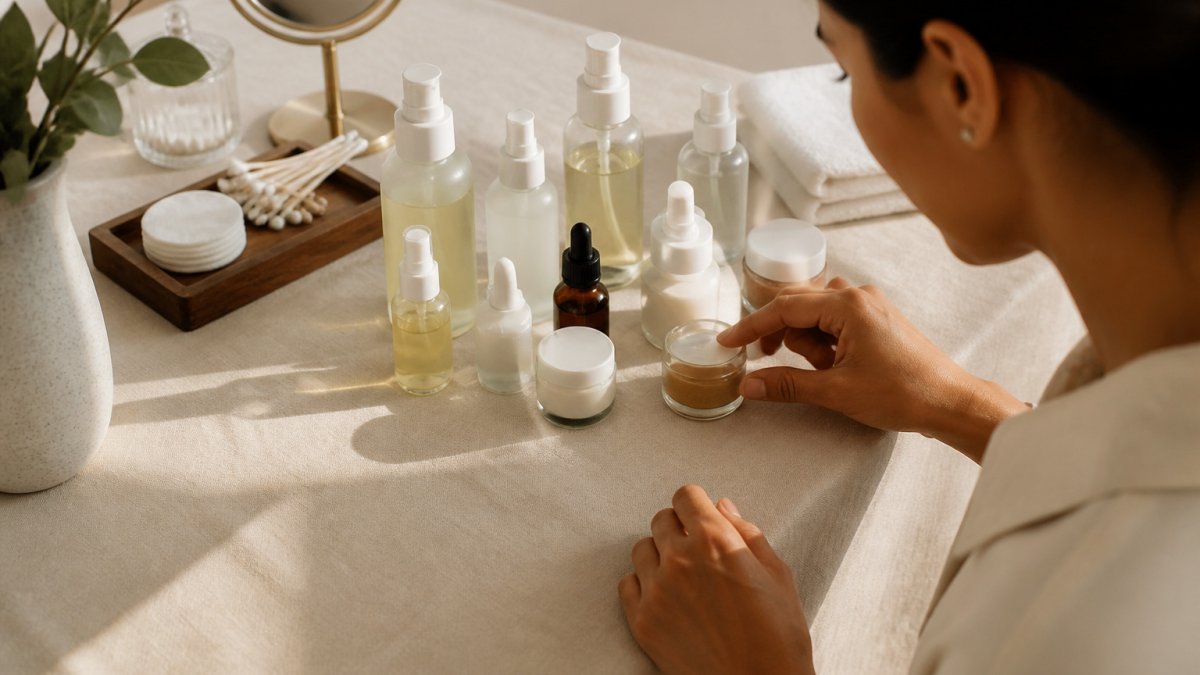
 Comparison
Morning vs Night Skincare Steps: What Changes
Quick Summary
Morning skincare steps focus on protection: cleanse or rinse, apply a serum, moisturize, and finish with sunscreen. Night skincare steps focus on cleansing and repair, including removing sunscreen and makeup, applying treatments, and moisturizing. Sunscreen is the key morning step that night routines do not replace.
- Morning skincare protects skin from UV light, pollution, and heat during the day.
- Night skincare removes sunscreen and makeup, then supports overnight repair.
- Apply broad-spectrum sunscreen as the final morning step, about a quarter teaspoon for face and neck.
- Use retinol or exfoliating acids at night, since sunlight can increase their irritation.
- Add one acne active at a time and wait two to three weeks before adding another.
Table of Contents
- Morning vs Night Skincare Steps: What Changes
- Morning vs Night Skincare: Goals That Differ
- Side-by-Side Morning and Night Routine Comparison
- Morning Skincare Routine Order, Step by Step
- Simple Night Skin Care Routine Steps
- What Time Should I Do Skincare at Night?
- Morning and Night Skincare Routine for Acne-Prone Skin
- Choosing Your Starter Routine and Shopping Radiant Essence Beauty
- Frequently Asked Questions
Morning vs Night Skincare Steps: What Changes
Last Updated: November 9, 2026
Morning and night skincare steps look similar on a shelf, but they do different jobs. Most people in the United States follow a routine that was copied from a friend or a viral video. A clearer plan starts with the goal of each part of the day.
The short version: morning skincare protects, and night skincare cleans and repairs. Once you see that split, skincare steps explained in order become much easier to follow. The sections below walk through each routine, compare them side by side, and address acne-prone skin, timing, and how to pick a starter routine.
Morning vs Night Skincare: Goals That Differ
Morning skincare is mostly about defense. Overnight, your skin has done its repair work, and by morning it is exposed to UV light, pollution, and heat. The goal is to clean away oil and sweat, add hydration, and put a barrier of sun protection on top.
Night skincare is about recovery. You remove the day's sunscreen, makeup, and grime, then give your skin time to rebuild. This is when many people use treatments such as retinoids or exfoliating acids, since sunlight can make those ingredients more irritating.
Some people assume more steps always means better results. In practice, a morning routine can be short, while a night routine may need one or two extra products for targeted concerns. American Academy of Dermatology guidance on daily sun protection
Side-by-Side Morning and Night Routine Comparison
The table below shows how the two routines usually differ. Treat it as a starting framework, not a rule.
| Step | Morning | Night |
|---|---|---|
| Cleanse | Gentle cleanser or water rinse | Double cleanse if wearing sunscreen or makeup |
| Treat | Vitamin C or hydrating serum | Retinol, exfoliating acid, or spot treatment |
| Hydrate | Lightweight moisturizer | Richer moisturizer if skin is dry |
| Eyes | Optional eye cream | Eye cream or eye serum |
| Protect | Broad-spectrum sunscreen, SPF 30 or higher | Not needed |
| Main goal | Protection and daytime defense | Cleansing and overnight repair |
Two patterns stand out. Sunscreen is the only essential morning step that night skincare does not replace. Active ingredients belong almost entirely at night, because they can increase sun sensitivity.
Morning Skincare Routine Order, Step by Step
Follow this order so each product can absorb properly. Thinner textures go first, thicker textures last. If you want to know how to layer skincare products effectively, the rules are covered in detail.
- Cleanse or rinse. A gentle cleanser removes overnight oil. Dry or sensitive skin often does well with only water.
- Apply a treatment serum. A vitamin C serum or a hydrating serum works well here.
- Add eye cream if needed. Apply a small amount around the orbital bone.
- Moisturize. Choose a lightweight formula if your skin is oily.
- Finish with sunscreen. Use a broad-spectrum product, and apply about a quarter teaspoon for the face and neck.
Sunscreen is the final step, not an optional extra. Skip it and the earlier steps do little for daytime protection. FDA sunscreen guidance for consumers
Watch out: Many people under-apply sunscreen. A thin layer provides much less protection than the labeled SPF, so measure it rather than guessing.
Simple Night Skin Care Routine Steps
A basic night routine has three core steps: cleanse, treat, and moisturize. Everything else is optional. The order matters because thinner, water-based formulas absorb first, and occlusive ingredients like petrolatum or dimethicone sit on top and block anything applied after them. For a simple, easy-to-follow nighttime approach, see a five-step guide for busy men.

- Remove makeup and sunscreen. An oil-based cleanser, cleansing balm, or micellar water dissolves sunscreen filters and makeup pigments that a water-based wash alone leaves behind. Massage it onto dry skin for about 30 seconds, then rinse.
- Cleanse again. A gentle water-based cleanser removes the residue the oil cleanser lifted, plus sweat and sebum. This is the double cleanse. If you wore no sunscreen or makeup, a single gentle cleanse is enough.
- Apply a treatment to dry skin. Retinol and exfoliating acids work better on dry skin because water can increase penetration and irritation. Wait about one minute after cleansing, then apply a pea-sized amount of retinol or a thin layer of acid. Start with two to three nights per week.
- Add eye cream or a spot treatment. Apply eye cream around the orbital bone, not directly on the lid. Spot treatments go only on the blemish, not across the whole face.
- Moisturize. Night creams can be richer than daytime formulas because there is no makeup or sunscreen to layer over them. If you use a retinoid, apply moisturizer after it to buffer dryness.
Watch out: Applying retinol to damp skin, or mixing it with an exfoliating acid in the same routine, raises the risk of redness and peeling. Alternate nights instead of layering them.
A common pattern is to wait about one minute between thin layers and a few minutes before the final moisturizer. You do not need to wait 20 minutes between every step; that advice is mostly relevant when layering strong actives.
Check the product pages for current availability and pricing.
What Time Should I Do Skincare at Night?
Doing your night routine within an hour or two of bedtime is a common approach. You want to remove sunscreen and makeup before they sit on your skin for hours.
If you get home late, cleansing still matters more than the exact hour. Skipping the cleanse to save time is the bigger mistake.
Active ingredients usually work best when applied to clean, dry skin. Wait a few minutes after cleansing, then apply your treatment.
Morning and Night Skincare Routine for Acne-Prone Skin
Acne-prone skin needs gentler handling than most guides suggest. Readers with sensitive or combination skin concerns can find routine guidance tailored to combination and sensitive skin. Harsh scrubbing and too many active products can strip the barrier and cause more breakouts. The goal is to reduce inflammation and keep pores clear without triggering rebound oil production.
Morning routine for acne-prone skin:
- Use a gentle, non-comedogenic cleanser. Avoid scrubs with walnut shell or coarse beads, which can create microtears.
- Apply a niacinamide serum if your skin tolerates it; niacinamide can help with oil control and redness.
- Use a lightweight, oil-free moisturizer. Skipping moisturizer can make oily skin produce more sebum.
- Finish with a broad-spectrum, oil-free sunscreen labeled non-comedogenic. Some chemical filters can feel lighter than physical ones on oily skin.
Night routine for acne-prone skin:
- Double cleanse if you wore sunscreen or makeup. Use an oil-based cleanser first, then a gentle water-based cleanser.
- Apply one acne active: salicylic acid, benzoyl peroxide, or adapalene. Do not stack all three on the same night.
- Follow with a non-comedogenic moisturizer. If your skin is dry or flaky, apply moisturizer before the active as a buffer.
How to combine actives safely:
A common mistake is starting several actives at once. Add one product at a time and wait two to three weeks before adding another, so you can tell what is helping and what is irritating your skin. Salicylic acid and benzoyl peroxide can be used on alternating nights if your skin tolerates both. Adapalene, a retinoid available over the counter, is usually applied at night; do not layer it with an exfoliating acid in the same routine. Vitamin C in the morning pairs well with sunscreen, but it can sting on active breakouts.
Adjust by skin type:
- Oily, acne-prone skin often does well with gel moisturizers and foaming cleansers, but avoid anything labeled "deep clean" or "purifying" if it leaves skin tight.
- Dry, acne-prone skin needs a cream moisturizer and may tolerate benzoyl peroxide better as a short-contact wash than as a leave-on gel.
- Sensitive, acne-prone skin should start with salicylic acid two nights per week and avoid fragrance and essential oils.
When to seek professional advice:
If you have cystic acne, scarring, or no improvement after eight to twelve weeks of consistent over-the-counter treatment, a dermatologist can discuss prescription options. Pregnancy and breastfeeding change which ingredients are appropriate; ask a clinician before starting retinoids or high-concentration salicylic acid.
Patch testing new products on the jawline before using them across your whole face is a sensible precaution.
Choosing Your Starter Routine and Shopping Radiant Essence Beauty
If you are new to skincare, begin with three products: a gentle cleanser, a moisturizer, and a sunscreen. For a broader walkthrough of building a complete routine from scratch, start there. Add a treatment such as retinol or a vitamin C serum once your skin tolerates the basics.
Knowing your skin type helps narrow the choice. You can learn how to find your skin type at home before you shop. Dry skin usually needs richer moisturizers, while oily skin does better with gel or water-based formulas. Combination skin often needs different products on different areas of the face.
Visit the website for current pricing, shipping details, and product information before you buy.
Ready to build your routine? Shop Now at Radiant Essence Beauty for cleansers, serums, moisturizers, and sunscreens that fit a simple morning and night plan.
Frequently Asked Questions
What is the ideal order for my morning and night skincare routine?
Morning routines run from the thinnest product to the thickest and end with sunscreen, which is the one step you should never skip during the day. A typical morning order is cleanser, toner or essence, serum, moisturizer, then broad-spectrum SPF 30 or higher. Night routines usually start with cleansing (a double cleanse if you wear sunscreen or makeup), then treatments such as retinol, followed by a moisturizer to seal everything in. Applying a water-based product before an oil-based one is the general rule in both routines.
Can I do the same skincare routine morning and night?
You can use the same cleanser and moisturizer both times, but the two routines serve different purposes. Mornings focus on protection, so sunscreen is required, while nights focus on repair and often include active ingredients like retinol that can make skin more sensitive to sun. Many people keep a gentle cleanser and a hydrating moisturizer in both routines and rotate treatments only at night. Adding a daily sunscreen in the morning is the key difference you should not skip.
Which two serums cannot be used together?
Using retinol and a strong direct-acid exfoliant such as glycolic or lactic acid in the same routine can over-exfoliate and irritate the skin. Vitamin C and retinol are often recommended for separate times, with vitamin C in the morning and retinol at night, because combining them can increase irritation for some people. If you want to use both, alternate nights or start with lower concentrations. Patch testing new combinations before applying them to your whole face is a sensible precaution.
What is the 4-2-4 rule in skincare?
The 4-2-4 rule is a guideline for spacing strong actives: use them about four days a week, leave two days for rest, and then repeat the cycle. It is commonly applied to retinoids and exfoliating acids that can dry or irritate skin when used too often. Adjust the schedule based on how your skin responds, and reduce frequency if you notice redness, flaking, or stinging. The rule is a starting point rather than a clinical standard.